Black EPDM: Where Rubber Still Earns Its Place in San Bernardino County
Black EPDM is the oldest single-ply membrane still in wide use, and there are roofs in this county where it remains the best answer. There are also plenty of valley buildings where we'd talk you out of it. The difference comes down to elevation, energy code, and what the building underneath is doing.
The Membrane Itself
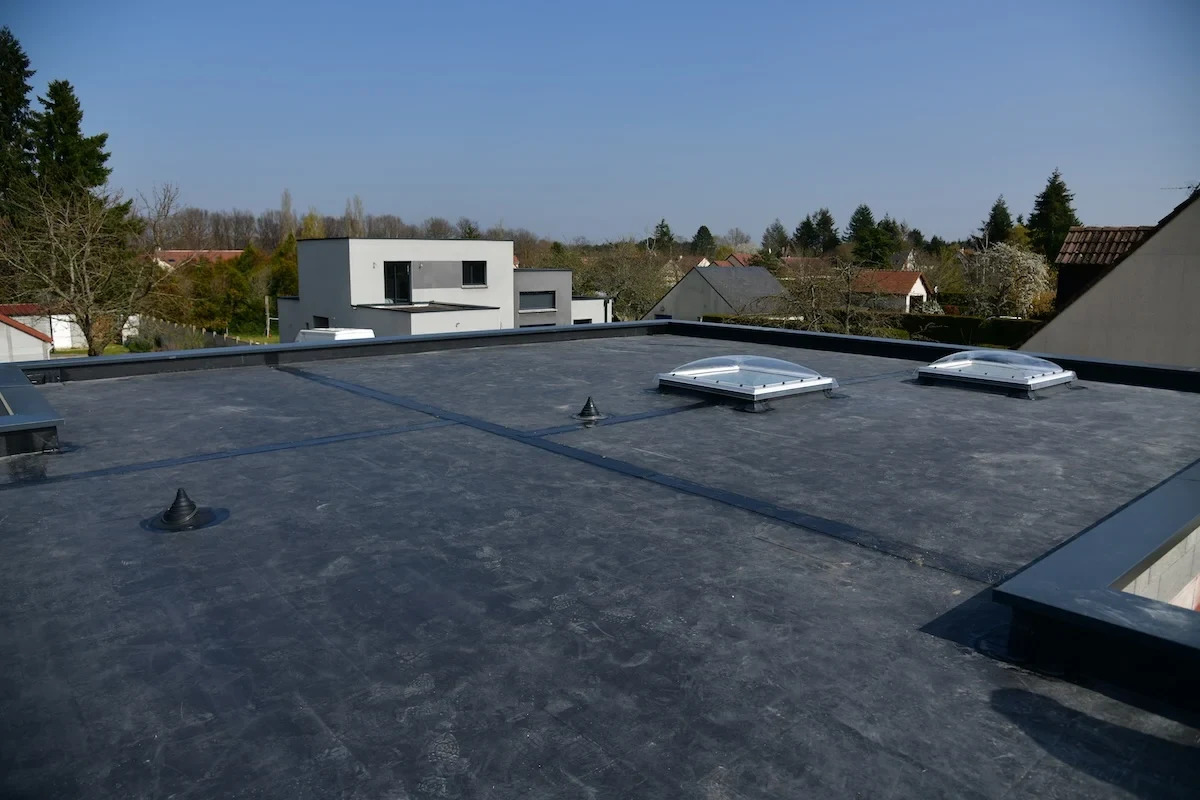
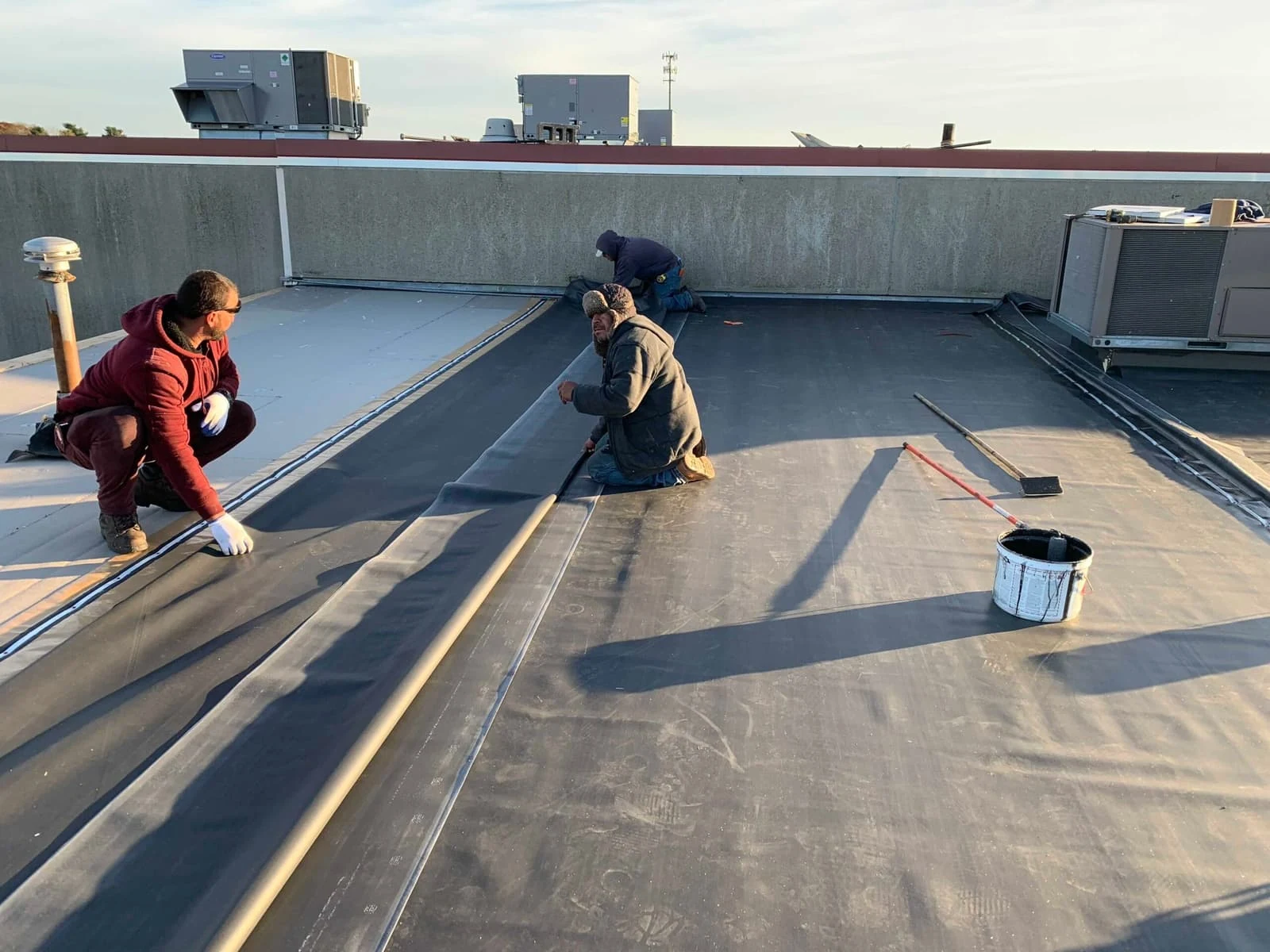
EPDM is a synthetic rubber, ethylene propylene diene monomer, cured into large flexible sheets. The carbon black that makes it black isn't a dye. It's a UV stabilizer, and it's the reason black EPDM has the longest real-world track record of any single-ply. There are EPDM roofs in service past 40 years, which no thermoplastic can claim yet.
The defining property is elongation. EPDM stretches over 300 percent before failing, so it absorbs building movement, thermal shock, and substrate shifting that would stress a stiffer sheet. On a roof that sees a 70-degree temperature swing in a day, or a building that racks slightly in wind, that flexibility is structural insurance.
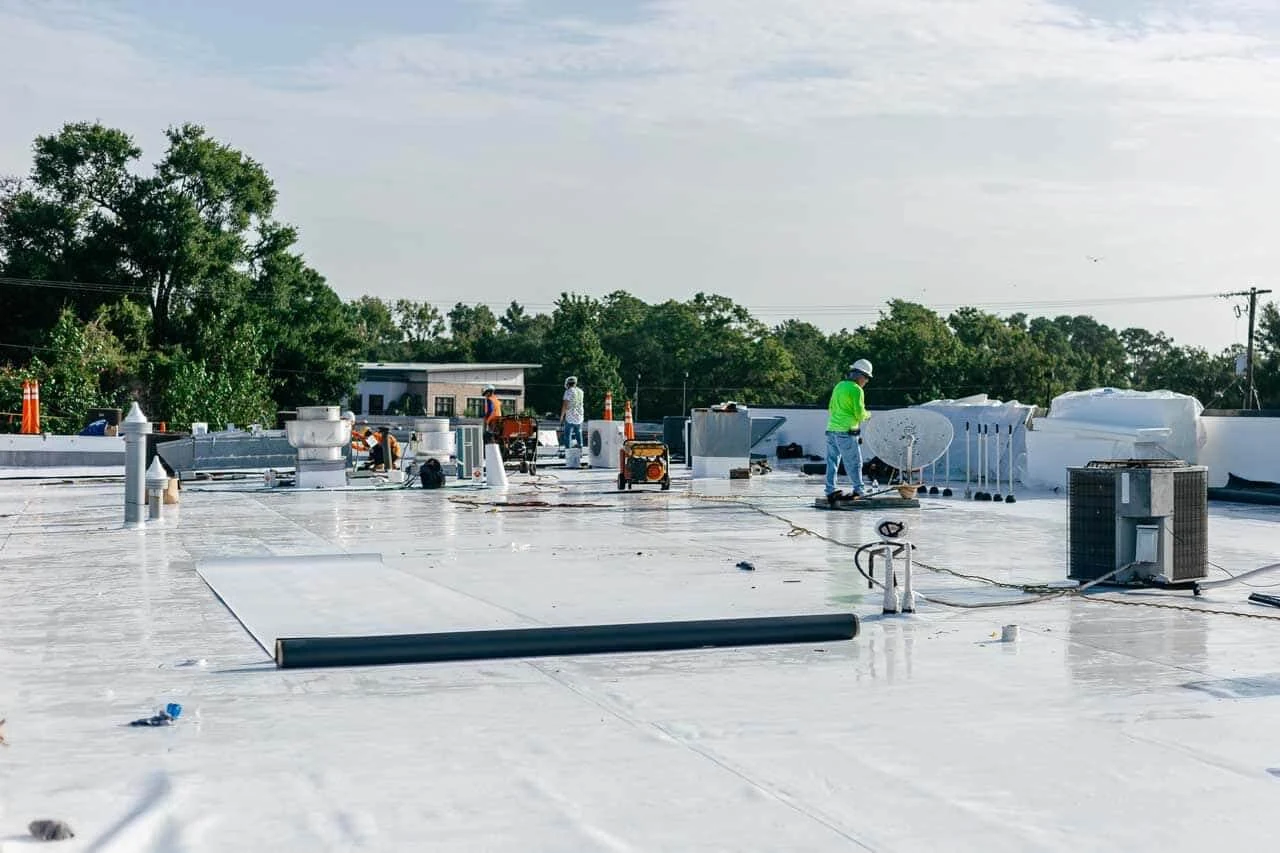
The weak point has always been the seams. EPDM can't be heat-welded, so seams rely on adhesives and tapes. Modern factory-applied seam tape is a huge improvement over the old field-glued splices, but a taped seam still isn't a welded one, and seam care is where EPDM installation quality shows.
The Heat Problem in the Valley
A black roof in Fontana in July is a frying pan. Surface temperatures on black EPDM can run 170 degrees or more under full sun, and all that heat loads the insulation, the deck, and the building's cooling bill. On a conditioned warehouse or retail building down in the valley, that's real money every month, and it accelerates the aging of everything in the roof assembly.
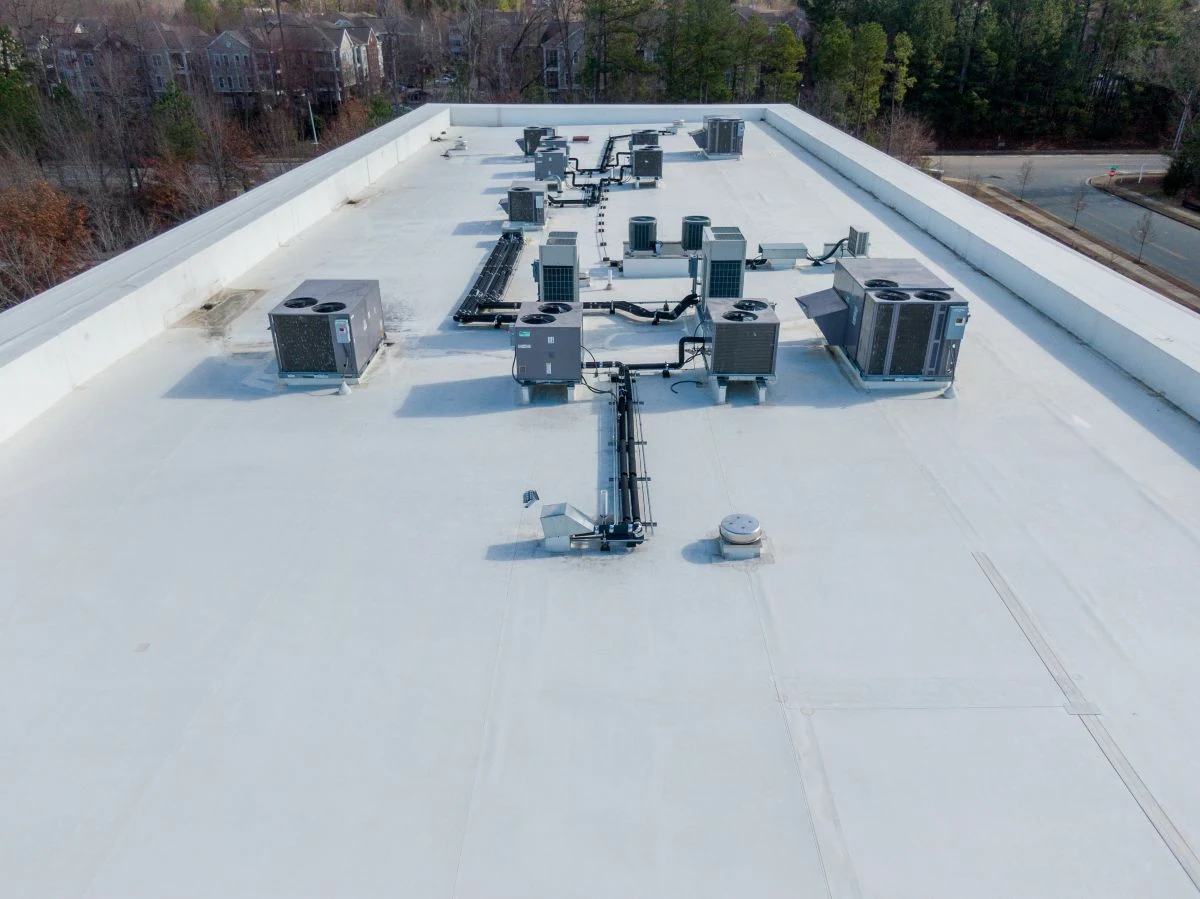
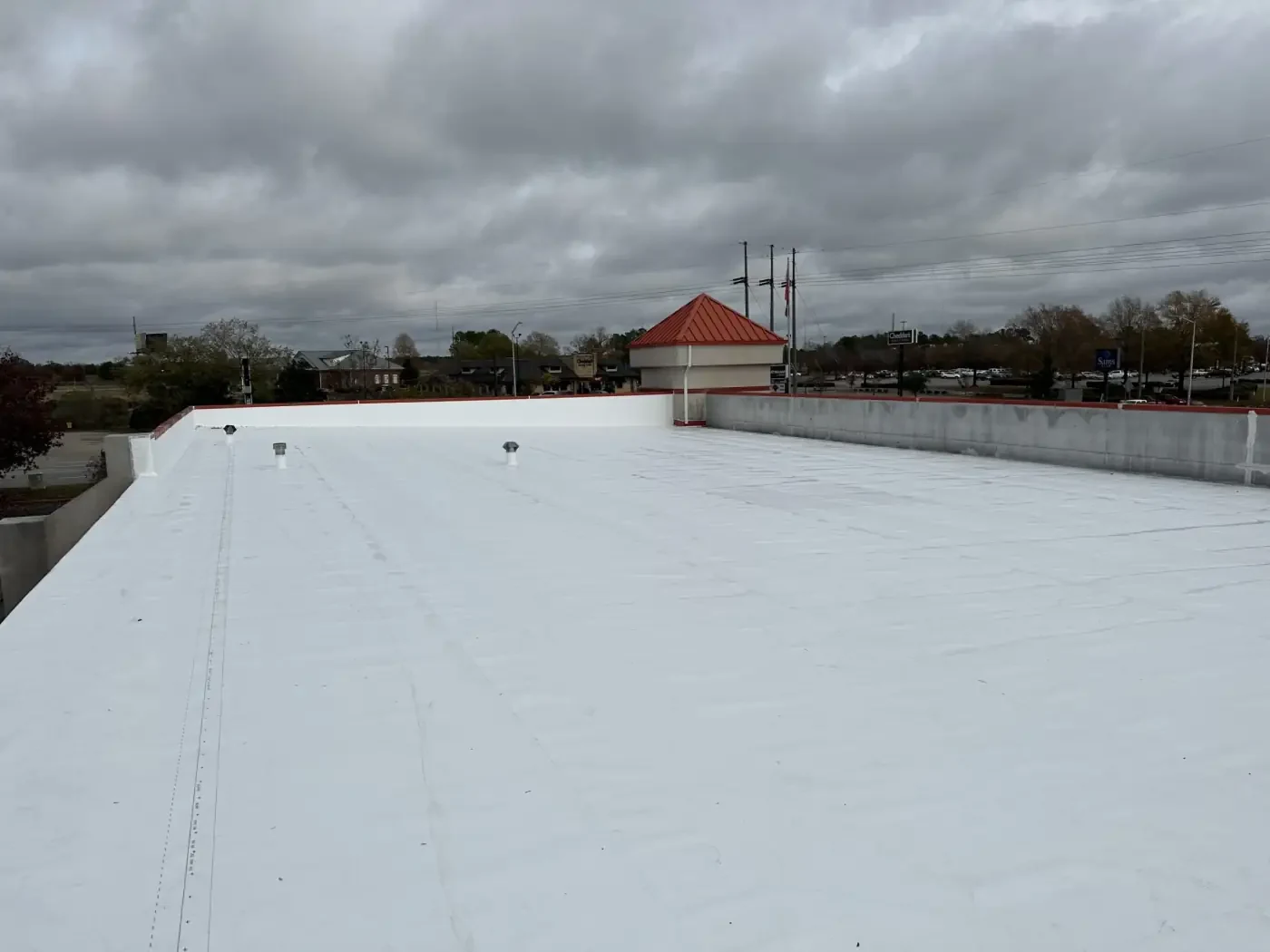
California's Title 24 energy code puts hard numbers on this. Low-slope commercial roofs generally need to meet aged reflectance and emittance minimums that plain black EPDM does not hit. On new construction and most re-roofs in the valley, black EPDM simply doesn't comply without a compliant coating over it or trade-offs elsewhere in the energy budget. That's a code conversation, not an opinion, and it's why the valley warehouse market went white.
Where black EPDM stays fully legitimate is ballasted assemblies, roofs under equipment screens, and buildings where the code path works differently. And above the snow line the calculation flips entirely.
Mountain Buildings Are a Different Climate
Drive up Highway 18 from the valley floor and you pass from high desert into snow country in 40 minutes. Commercial buildings in Crestline, Lake Arrowhead, Running Springs, and Big Bear's approaches deal with snow load, freeze-thaw cycling, ice at drains and eaves, and hail that the valley never sees. That's EPDM territory.
Black EPDM absorbs solar heat, which up there is a feature. It helps shed snow and melt ice at the membrane surface. The rubber stays flexible far below freezing, while thermoplastics get stiff and brittle-feeling in cold weather work. Freeze-thaw cycling that opens up seams and cracks in other systems is exactly what EPDM's elongation absorbs.
We install black EPDM on lodge roofs, village retail around Lake Arrowhead, camp and retreat buildings in Forest Falls and Twin Peaks, and flat-roofed sections of mountain commercial properties. Fully adhered is the standard up there; wind exposure on the rim communities like Rimforest is serious, and ballast on a snow roof creates drainage problems.
Attachment Options and Where Each Fits
EPDM gives you three ways to hold the roof down, and the building picks the method:
- Ballasted: loose-laid membrane under river rock or pavers, fast and economical, needs structure that can carry the weight
- Fully adhered: bonded to the substrate, the standard for wind country and mountain work
- Mechanically fastened: plates and fasteners under the sheet, less common with EPDM but workable on steel decks
- Large sheet sizes, up to 50 feet wide, mean fewer field seams than any other membrane
- Seam tape splices installed with primer, rolled, and inspected seam by seam
Ballasted EPDM deserves a note for valley owners: because the membrane is covered by rock, the code treats it differently for reflectivity, and the ballast protects the sheet from UV entirely. Some of the longest-lived roofs in the Inland Empire are ballasted EPDM from the 1980s. The catch is finding leaks under a few hundred tons of stone, and verifying the structure was designed for the load before anyone specs it.
Lifecycle and Repair Behavior
Black EPDM ages slowly and predictably. The sheet chalks, loses some thickness, and gets less flexible over decades rather than years. Failures concentrate at seams, flashings, and penetrations, all of which are repairable with primer and tape for the whole life of the roof. That repairability is a genuine advantage: a 25-year-old EPDM roof can still be patched reliably, while old TPO gets progressively harder to weld.
End of life usually looks like widespread seam fatigue and shrinkage pulling at the perimeters. At that point the options are tear-off, a re-cover, or in some cases a coating restoration if the sheet is sound. We run core cuts and a moisture survey before recommending any of those paths, because wet insulation under old rubber changes the answer. For valley buildings ready to modernize, a re-roof to a reflective membrane usually pays for part of itself in cooling.
Black EPDM Questions, Answered Plainly
Can I still put black EPDM on my valley warehouse?
Usually not as an exposed membrane on a re-roof or new roof, because of Title 24 cool roof requirements. Ballasted assemblies and certain code paths are the exceptions. We'll tell you straight what the code allows on your specific building.
Why choose EPDM over TPO in the mountains?
Cold-weather flexibility, freeze-thaw tolerance, snow-shedding heat absorption, and a longer track record in exactly that service. It's the membrane we trust at elevation.
How long do the seams really last?
Factory tape seams installed with proper primer are good for decades, but they should be looked at on a maintenance schedule. Seam checks are the core of every EPDM inspection we do.
Is hail a problem for EPDM?
EPDM handles hail better than most membranes because it's rubber; it deforms and recovers. That matters in the foothill and mountain zones where hail actually falls in this county.
My ballasted EPDM roof leaks. Do I need a new roof?
Not necessarily. We move ballast in a grid pattern, trace the leak, repair, and re-stone. It's labor, but it's a fraction of replacement cost when the membrane is otherwise sound.