PVC Membrane for Grease, Chemical, and Restaurant Exposure
PVC looks a lot like TPO from the ground, both are white, hot-air welded single-ply membranes, but the chemistry underneath is different, and that difference matters on certain buildings. This page covers where we spec PVC instead of TPO and why.
Why PVC Instead of TPO on Certain Buildings
TPO's plasticizers don't hold up well against sustained grease or petroleum-based chemical exposure. PVC's chemical makeup resists that kind of exposure far better, which is why we spec it on buildings where rooftop grease, oils, or solvents are a regular presence rather than an occasional spill.
The Inland Empire's food distribution and processing operations, concentrated around the rail-served Colton corridor, are a good example of where that distinction actually matters on a spec sheet rather than staying theoretical.
Hot-Air Welding PVC Seams
The welding process for PVC uses the same hot-air equipment and technique as TPO, so a crew skilled in one can weld the other. What doesn't carry over is compatibility, PVC and TPO membranes won't fuse to each other, so a repair patch has to match the existing membrane chemistry, and matching color alone gets a technician nowhere.
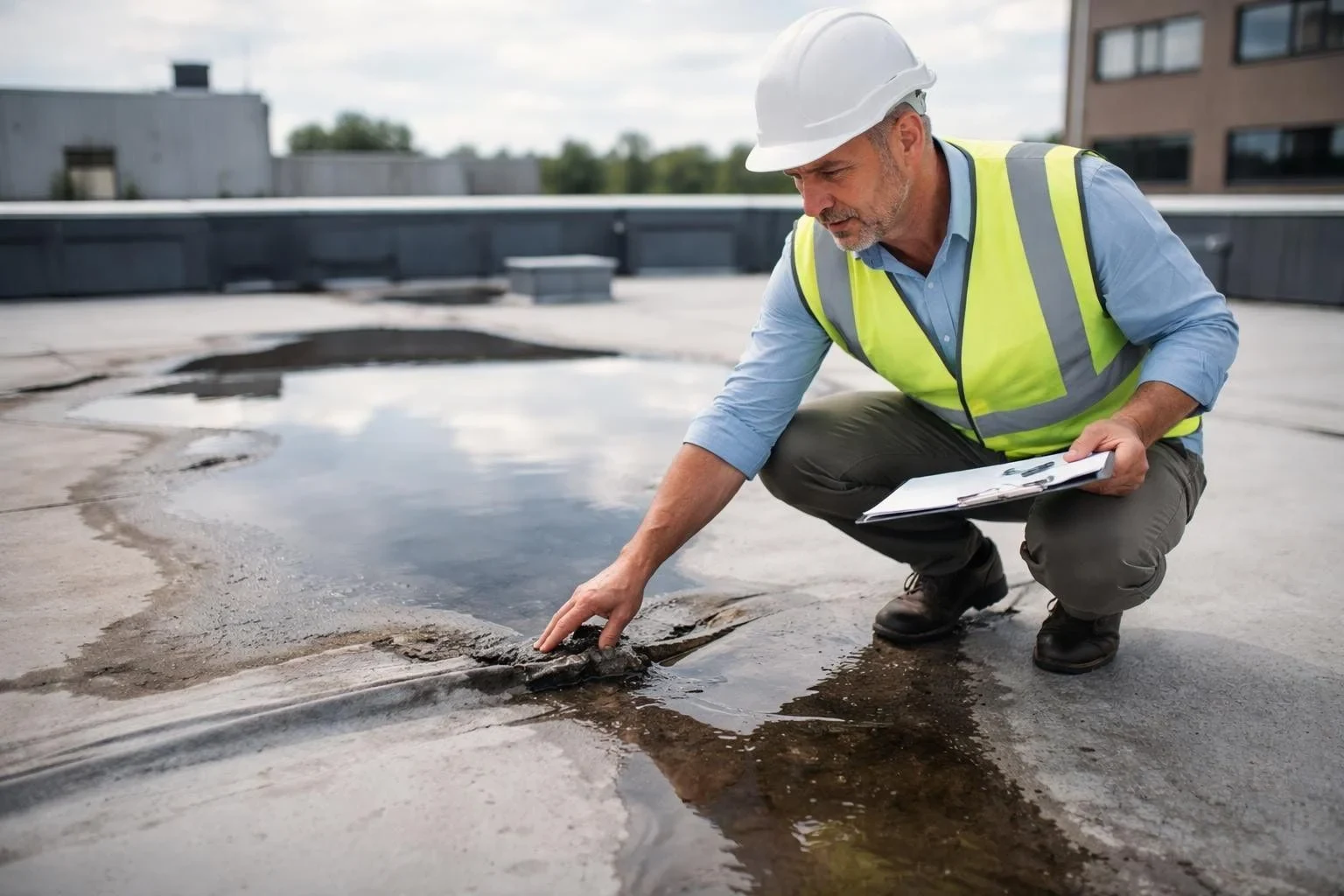
We keep that distinction in mind on any repair call. Matching a white membrane by sight isn't enough; we confirm what's actually up there before we show up with the wrong patch material.
Where Grease and Chemical Exposure Actually Show Up
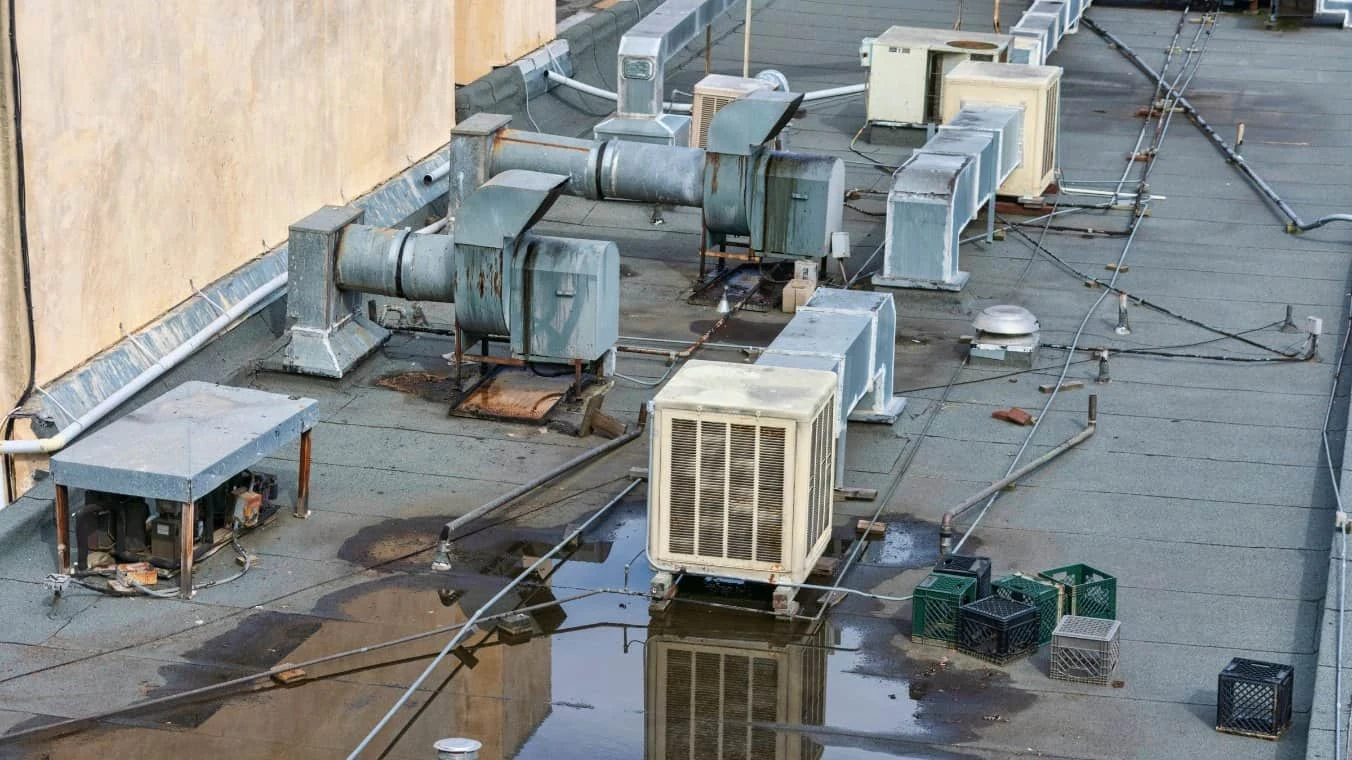
Kitchen exhaust fans on restaurant roofs are the most common source we deal with. Grease-laden air vents directly onto the roof surface around the exhaust curb, and over years that breaks down an unprotected membrane faster than sun exposure ever would.
Food processing and cold storage buildings carry a similar risk from refrigerant lines, condensate, and occasional cleaning chemical runoff near rooftop equipment. Grocery store roofs with rooftop refrigeration racks fall into the same category.
- Restaurant roofs near kitchen exhaust curbs
- Food processing and cold storage facility roofs
- Grocery store roofs with rooftop refrigeration equipment
- Buildings with regular solvent or chemical exposure
- Roofs serving rooftop grease traps or vent hoods
- Multi-tenant strips with shared restaurant venting
Reinforced vs Fleece-Backed PVC
Standard reinforced PVC handles most low-slope applications fine. Fleece-backed PVC adds a felt backing that improves puncture resistance and works well in recover applications over an uneven or slightly rough existing substrate, since the fleece layer helps bridge minor surface irregularities.
We choose between the two based on what's underneath and how much rooftop traffic or equipment loading the roof sees day to day.
On food processing buildings with heavy rooftop equipment and regular technician traffic servicing refrigeration lines, we lean toward the fleece-backed option almost by default, since the added durability underfoot pays for itself over the life of the roof.
How PVC Actually Performs in This Climate
Beyond chemical resistance, PVC handles the valley's UV load and heat cycling well, similar to TPO. The membrane holds its reflectivity over time, and hot-air welded seams give the same installation speed advantage on large roof areas that TPO offers.
The tradeoff is cost, PVC typically runs higher than TPO per square foot, which is why we reserve it for buildings where the chemical exposure case actually justifies the difference rather than specifying it across the board.
We walk owners through that cost comparison directly, with the actual exposure conditions on their roof as the deciding factor, rather than defaulting to the more expensive system as a blanket recommendation.
Questions We Get About PVC
How do I know if my building needs PVC instead of TPO?
If there's regular grease, oil, or chemical exposure on the roof, restaurant exhaust, food processing operations, chemical storage nearby, PVC is worth the extra cost. Otherwise TPO usually does the job for less.
Can you patch a PVC roof with TPO material in an emergency?
Not as a permanent fix. The two membranes don't weld together chemically, so a mismatched patch will eventually separate. We carry PVC patch material specifically for PVC roofs.
Does PVC handle rooftop grease better long-term than a coated TPO roof?
Yes, PVC's chemical resistance to grease and oils is inherent to the membrane itself, whereas a coating on TPO is a surface layer that can wear through with sustained exposure.
How long does PVC membrane typically last on a restaurant roof?
With regular grease trap and exhaust curb maintenance on the tenant's side, a PVC roof holds up for decades of service, well beyond what an unprotected membrane would manage in the same exposure.
Do you install PVC on new construction or mainly for replacements?
Both. New restaurant and food processing construction gets specified with PVC from the start when the exposure risk is known ahead of time; existing buildings often come to us after a TPO or EPDM roof has already broken down from grease exposure.