Warehouse Roofing Across the San Bernardino Valley
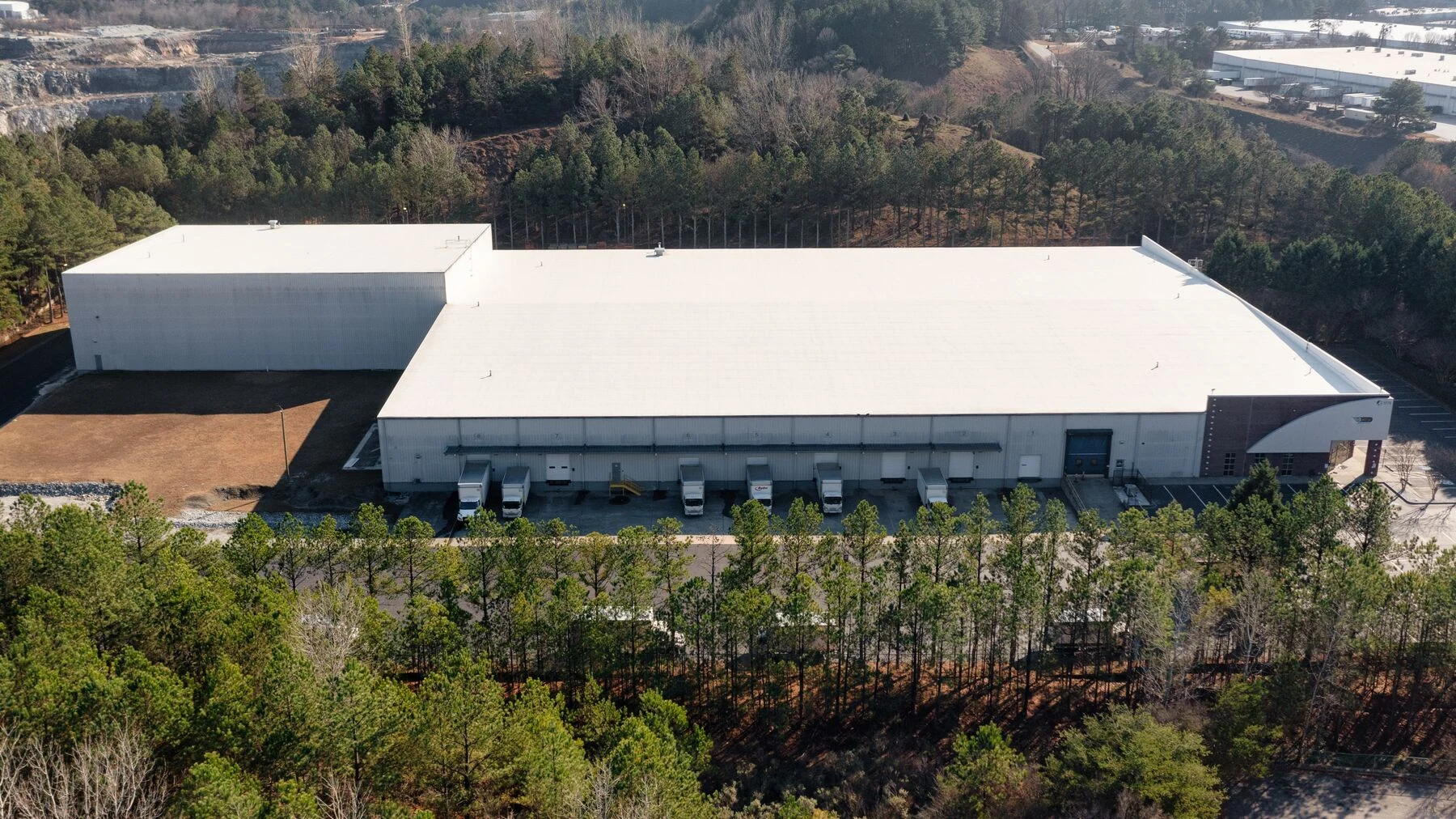
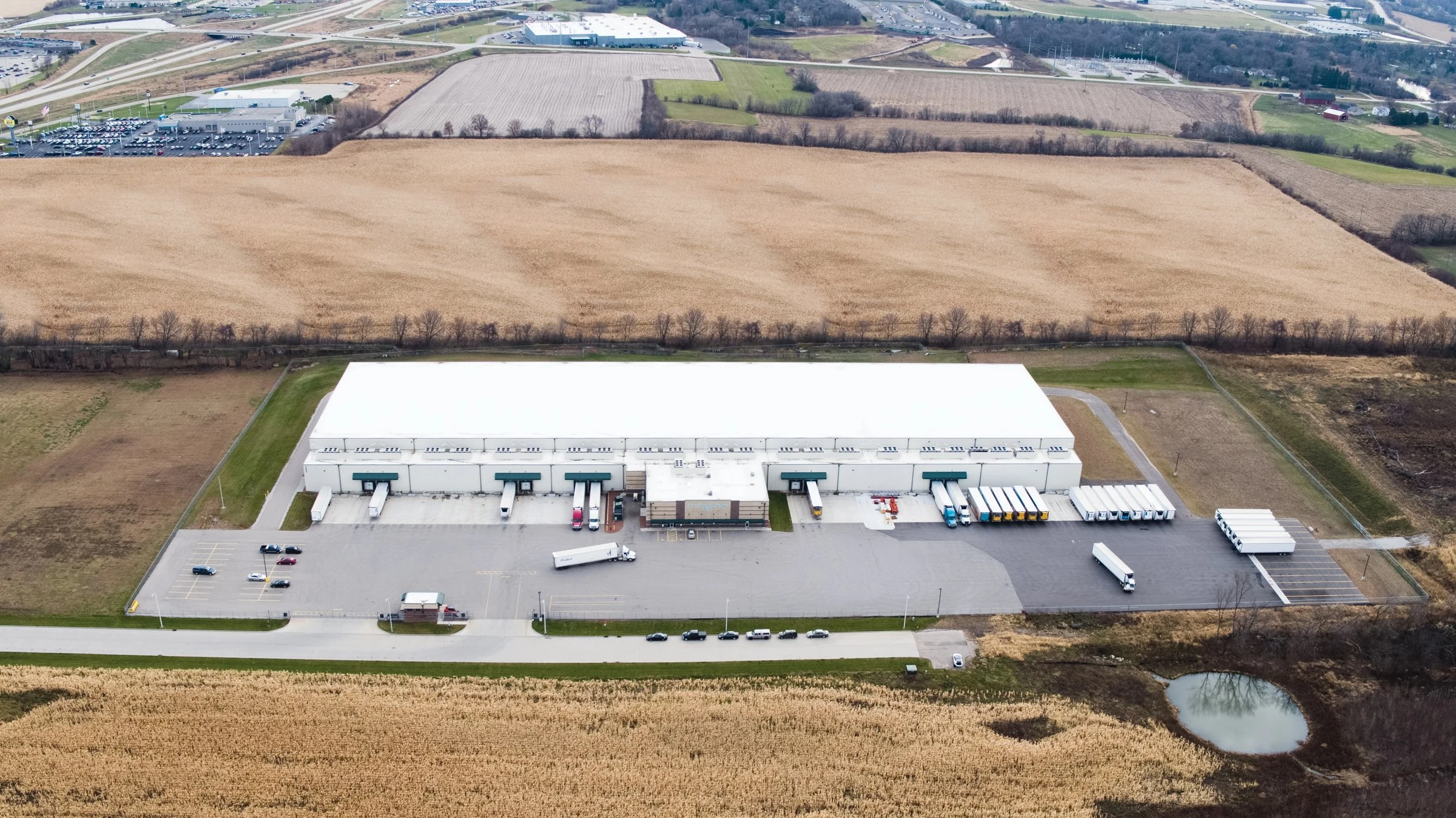
The eastern Inland Empire holds more warehouse square footage than any market in the country, and nearly all of it sits under single-ply membrane on steel deck. We replace, recover, and repair those roofs from the Fontana truck corridors out to Redlands. Warehouse work is its own discipline, and this page explains how we run it.
What Half a Million Square Feet of Roof Actually Involves
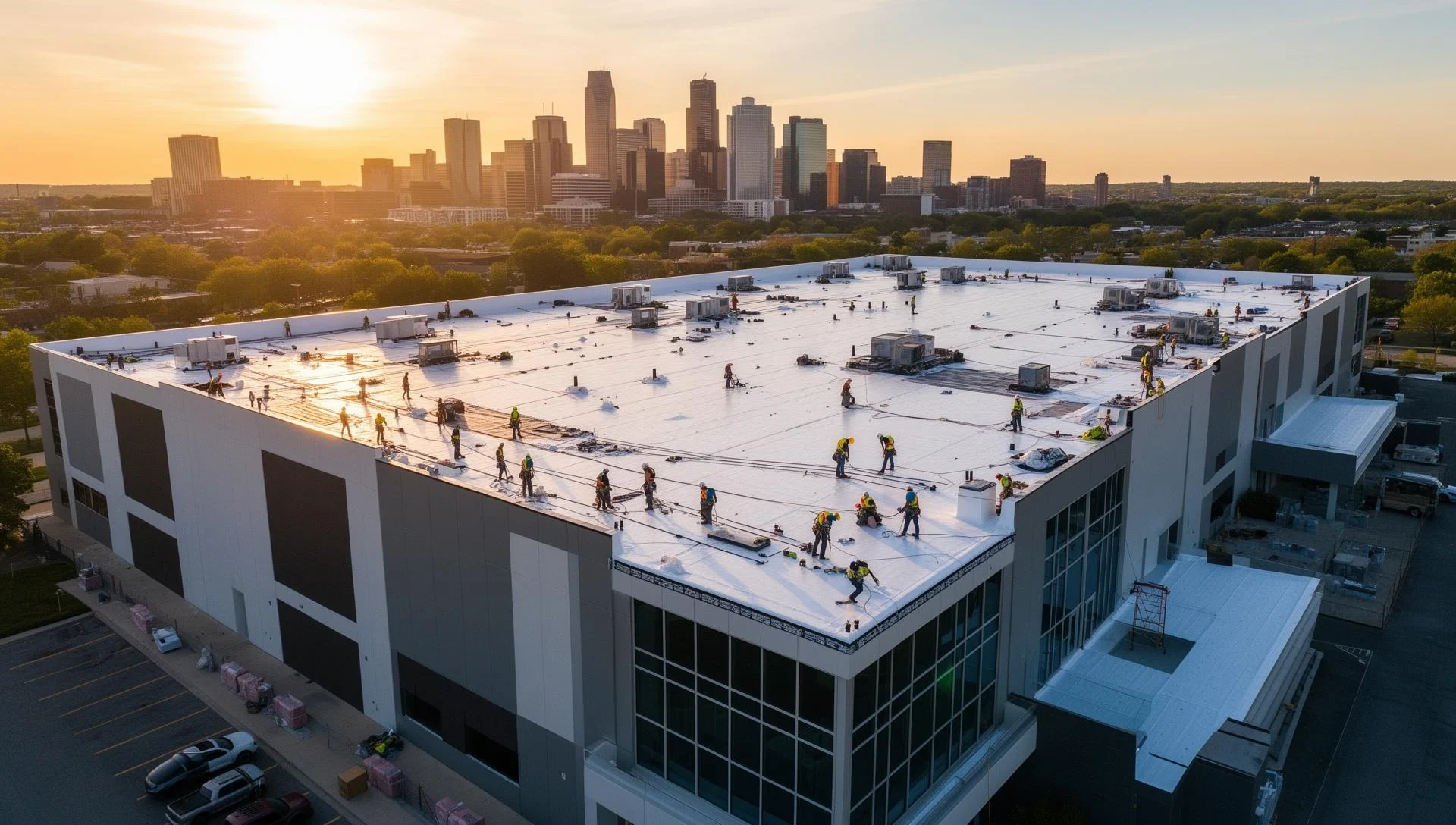
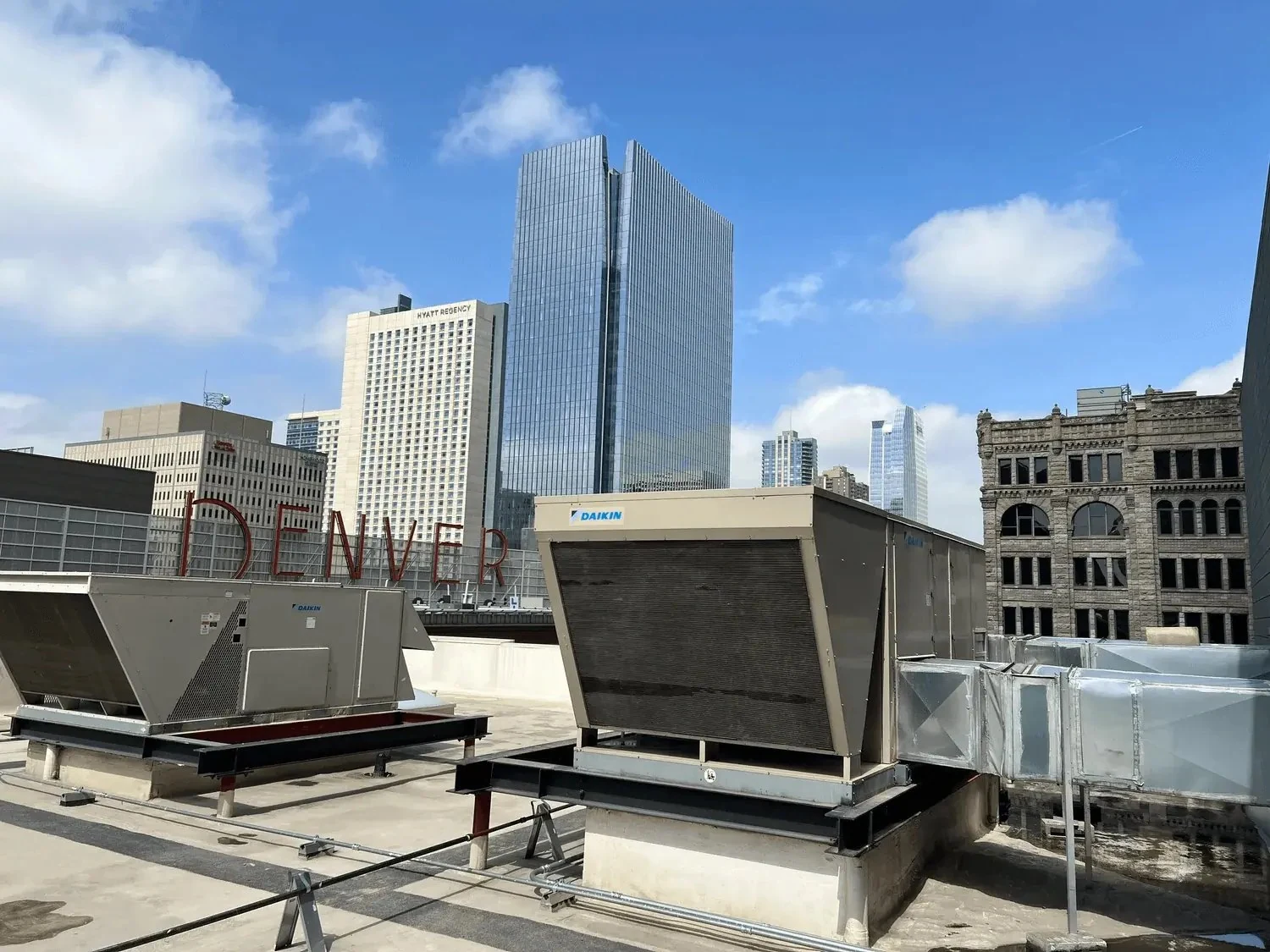
A typical fulfillment building along I-10 carries a roof bigger than most people ever think about. That is miles of welded seam, hundreds of drains and overflow scuppers, long runs of skylights, and dozens of RTU curbs. On a roof that size, a detail that fails once per hundred squares fails a lot of times.
Our crews plan warehouse roofs in grids. Every drain gets numbered. Every skylight gets logged. Material staging is mapped before the first truck arrives, because you cannot crane forty loads of insulation onto a deck without knowing where the joists can take the weight.
We also plan for the deck itself. Most tilt-up warehouses here have B-deck spanning open-web joists. Rust at lap fasteners, oil-canning near old leak zones, and soft spots at abandoned curbs all get flagged during the survey, not discovered mid-tear-off.
Santa Ana Winds Test the Corners First
Wind out of the Cajon Pass is the number one killer of warehouse membranes in this valley. Santa Ana events push sustained winds down through Devore and across the Fontana and Rialto flats, and roof corners take uplift loads several times higher than the field.
When we lay out a new TPO or EPDM roof, corner and perimeter zones get tighter fastening rows or fully adhered attachment, sized to the wind maps for this exact area, not a generic spec. Edge metal matters just as much. A shop-bent coping that is not cleated correctly will peel in one bad November night and take membrane with it.
On existing roofs we check for the early signs: fluttering laps at the corners, backed-out plates telegraphing through the membrane, and coping joints that have started to walk. Catching that in October is cheap. Catching it in January is a claim.
Heat, UV, and Seam Life on I-10 Corridor Roofs
Summer deck temperatures on a San Bernardino warehouse roof run well past 160 degrees. That thermal load ages membrane faster than the same product ages on the coast. Seams take the worst of it, because the weld is where plasticizer loss and shrinkage concentrate stress.
We probe seams on every warehouse inspection instead of only looking at them. A seam that passes a visual can still fishmouth under a probe. On older TPO we also check the sheet for craze cracking around fastener plates, which tells you the top ply is near the end of its weathering package.
Here is what a standard warehouse roof survey from us covers:
- Core cuts to confirm insulation type, thickness, and moisture content
- Seam probing along field welds, flashings, and curb corners
- Drain and overflow scupper flow checks, with debris noted per drain
- Fastener back-out mapping in corner and perimeter wind zones
- Skylight and smoke-hatch condition, including curb flashing
- Edge metal, coping, and termination bar inspection
- Deck condition readings from inside the building where accessible
Recover or Tear-Off on a Tilt-Up Warehouse
California code allows one roof over the original, so the first question on any aging warehouse is whether the existing assembly is dry enough to stay. We answer that with moisture scans and core cuts, not guesswork. If more than a small percentage of the insulation is wet, a recover just buries a problem you will pay to open up later.
When the assembly is dry, a recover saves tear-off labor, dumpster pulls, and days of open-roof exposure. When it is wet, we tear off in controlled sections so no more deck is open at the end of a shift than we can dry-in that night. Monsoon-season thunderstorms come over the San Bernardino Mountains fast in August, and an open deck is not where you want to be when one does.
Roofing Over a Building That Never Stops Shipping
Most warehouse owners here cannot shut down for a roof. Trucks hit the docks around the clock, and inventory sits in racks directly under our work. We phase warehouse projects so loading operations keep moving: staging away from dock approaches, crane picks scheduled against shift changes, and interior protection over racking wherever we cut deck.
Fume and odor control gets planned too. Adhesive and torch work near air intakes can foul a building in minutes, so intakes get mapped and either shielded or scheduled around. Our foremen walk the sequence with your operations manager before mobilization, and the plan holds unless weather forces a change.
Warehouse Roofing Questions, Answered Plain
How long does a warehouse re-roof take?
Depends on square footage and phasing. A crew can typically install several hundred squares a week on an open field. Detail-heavy roofs with lots of curbs and skylights run slower. We give a schedule by phase, not a single vague end date.
Can you work while our racking is loaded?
Yes. We limit deck cuts to sections we can protect, use interior catch protection where required, and coordinate with your safety lead so nothing happens over an active pick aisle without notice.
Is TPO or EPDM better for a Fontana warehouse?
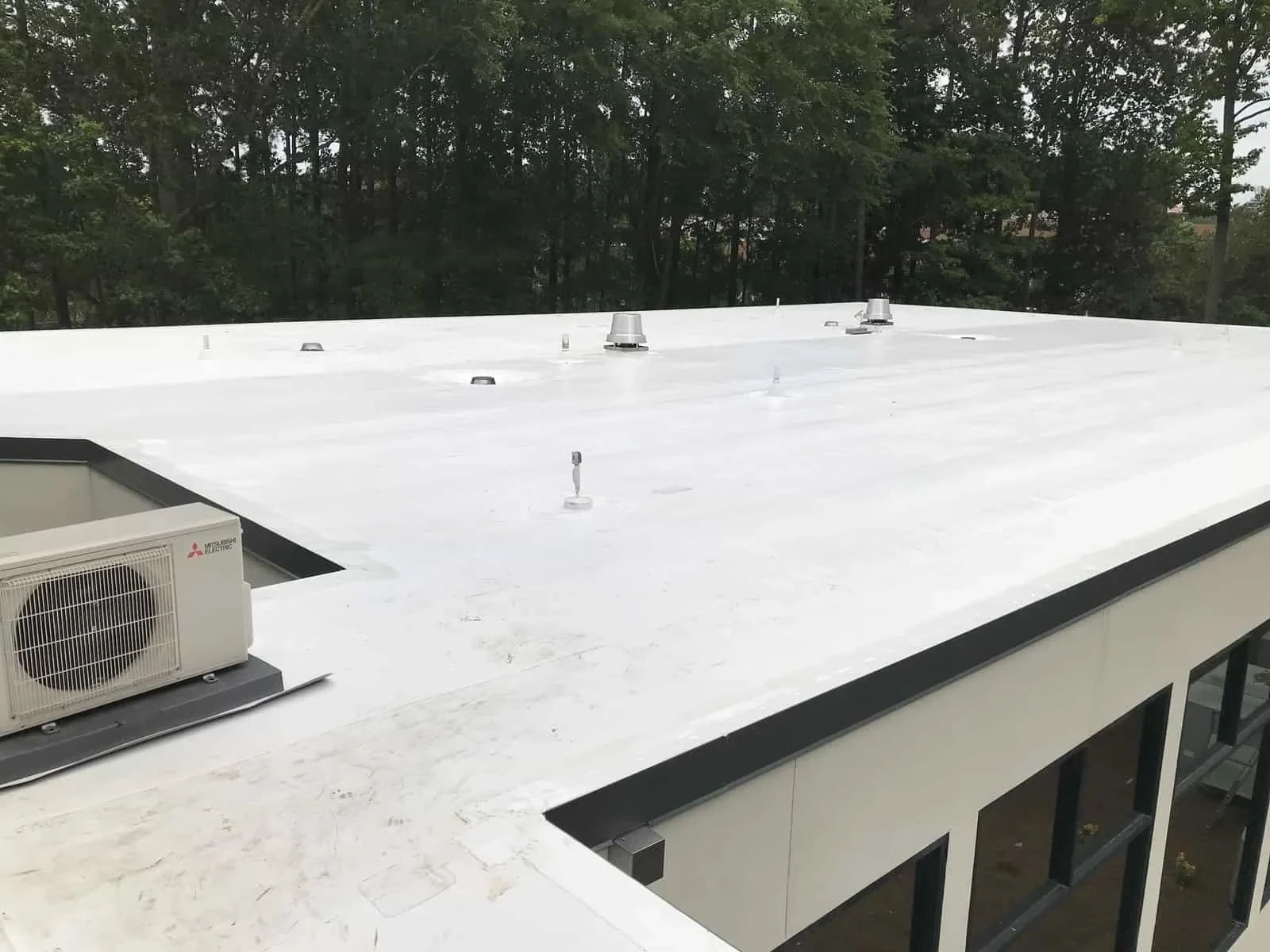
White TPO reflects the desert sun and cuts cooling load, which matters on a conditioned building. Black EPDM has a long track record and handles movement well. On a big unconditioned shell, cost and attachment method often decide it. We price both when it is close.
What thickness of membrane should a big warehouse get?
We rarely recommend less than 60-mil on a large warehouse in this climate. The UV load between San Bernardino and Redlands is brutal, and the step up to a thicker sheet is cheap insurance across a thirty-year hold.
Do you handle the roofs on older warehouses near the BNSF yard?
Yes. The older stock around the San Bernardino rail yards mixes built-up roofing and early single-ply, often with multiple patch generations. Those roofs need core cuts before anyone talks price, and that is exactly how we start.