Reroofing Commercial Buildings Across San Bernardino and the Eastern Inland Empire
A commercial roof out here does not fail all at once. It bakes, it dries out, it cracks at the seams, and one winter it starts letting water into the racking aisles. We reroof warehouses, retail centers, and office buildings from downtown San Bernardino out through Fontana, Rialto, and Redlands, and the first decision on every job is the same: recover the roof that is there, or take it off and start over.
What Reroofing Actually Covers
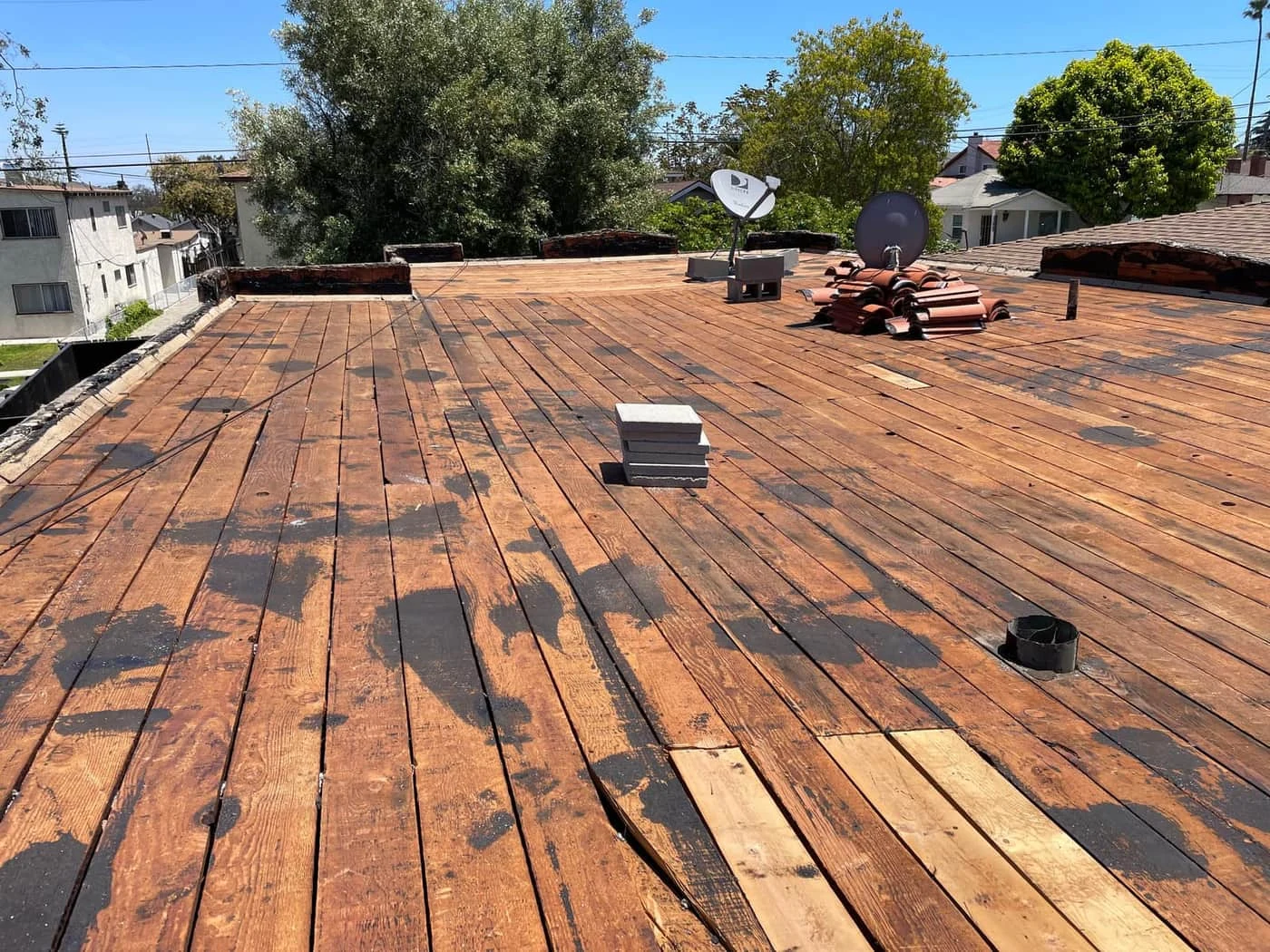
Reroofing is the umbrella term for putting a new roof system on an existing building. It splits into two paths. A recover leaves the old roof in place and installs a new membrane over it, usually with a separation layer or new insulation board between. A tear-off removes everything down to the deck before the new system goes on.
California code allows a recover only when there is one existing roof and it is dry enough to build over. Two roofs already stacked up means the next job is a tear-off, no exceptions. A lot of the older tilt-up stock along the I-10 corridor already carries a cap sheet over an original built-up roof, so we check that history before anyone talks price.
The honest answer is that plenty of roofs in this valley qualify for a recover and plenty do not. The difference is moisture in the insulation, and you cannot see that from the roof hatch. You have to test for it.
How the High-Desert Climate Ages a Roof
San Bernardino roofs take more UV than almost any market in the country. Summer deck temperatures on a dark cap sheet can run well past what the asphalt was designed to handle year after year. The binder dries out, the surface alligators, and the flashings pull away from the walls.
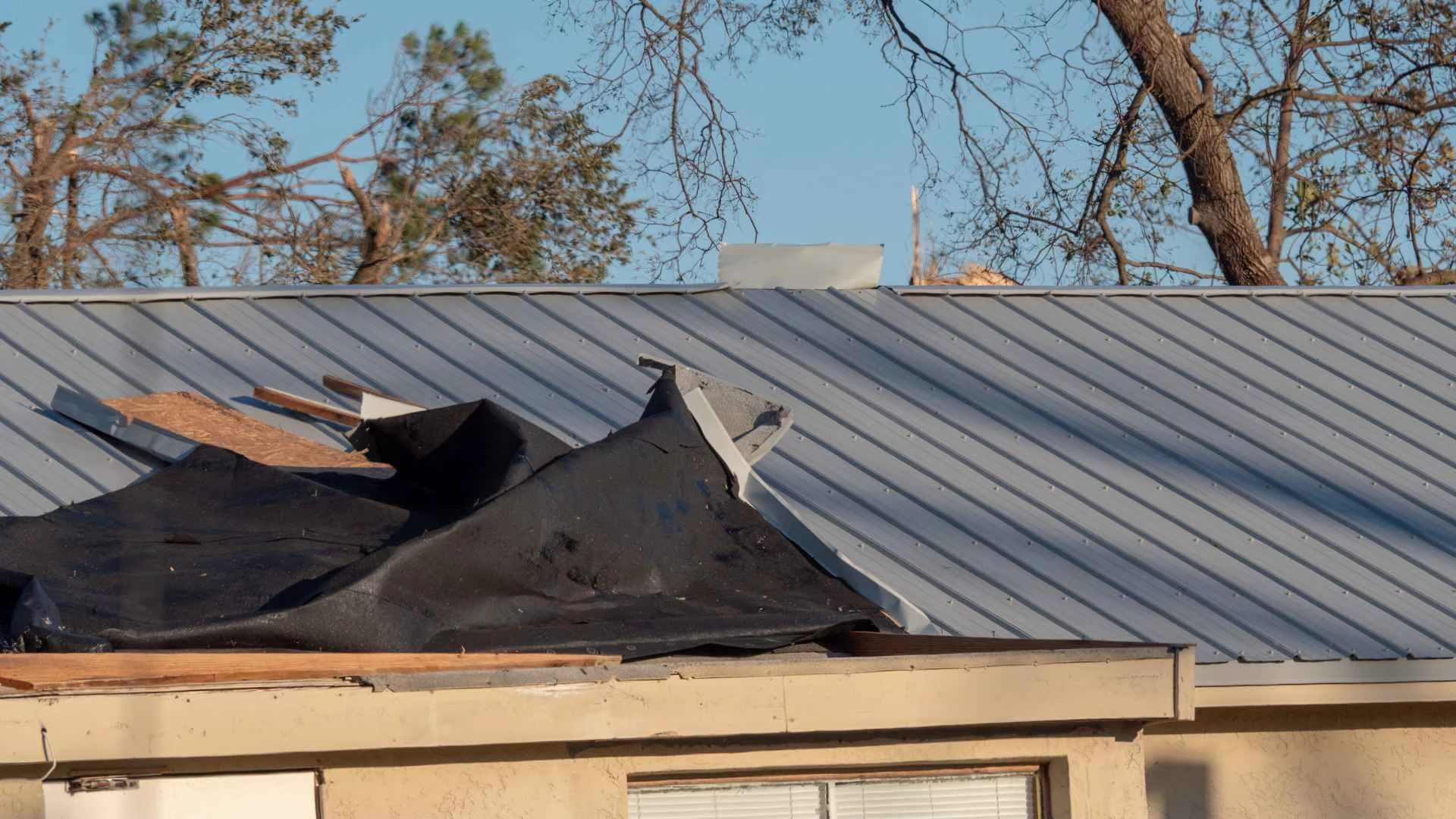
Then the Santa Anas come through the Cajon Pass every fall and work on whatever is loose. Wind gets under a lifted edge or an open lap and peels from there. The membranes that fail first around here are almost always the ones that lost their edge securement in a wind event two or three seasons before anyone noticed.
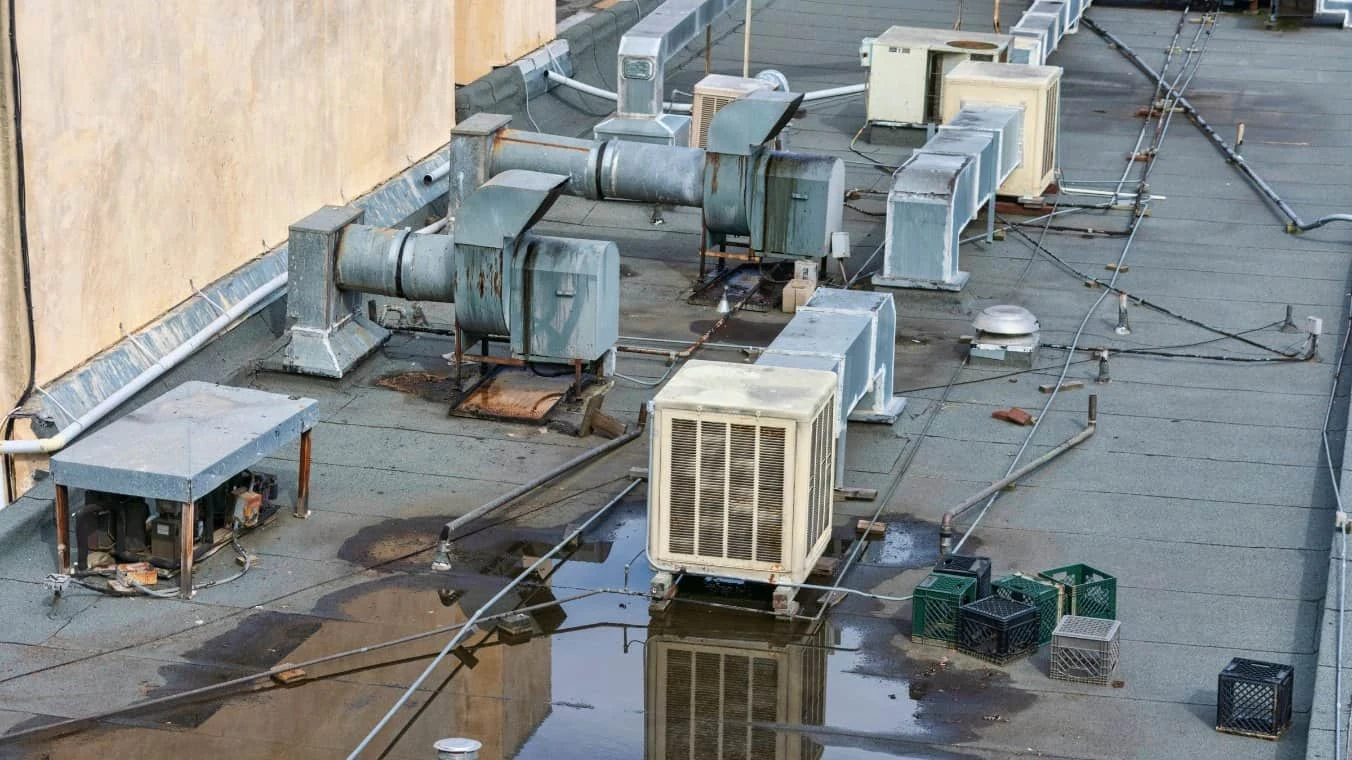
Thermal cycling does the rest. Hundred-degree afternoons and fifty-degree nights move a big roof field more than most people realize. Seams and penetrations flex daily, and after fifteen or twenty years of that, the accessories give out even when the field membrane still looks serviceable.
Recover or Tear-Off: How We Make the Call
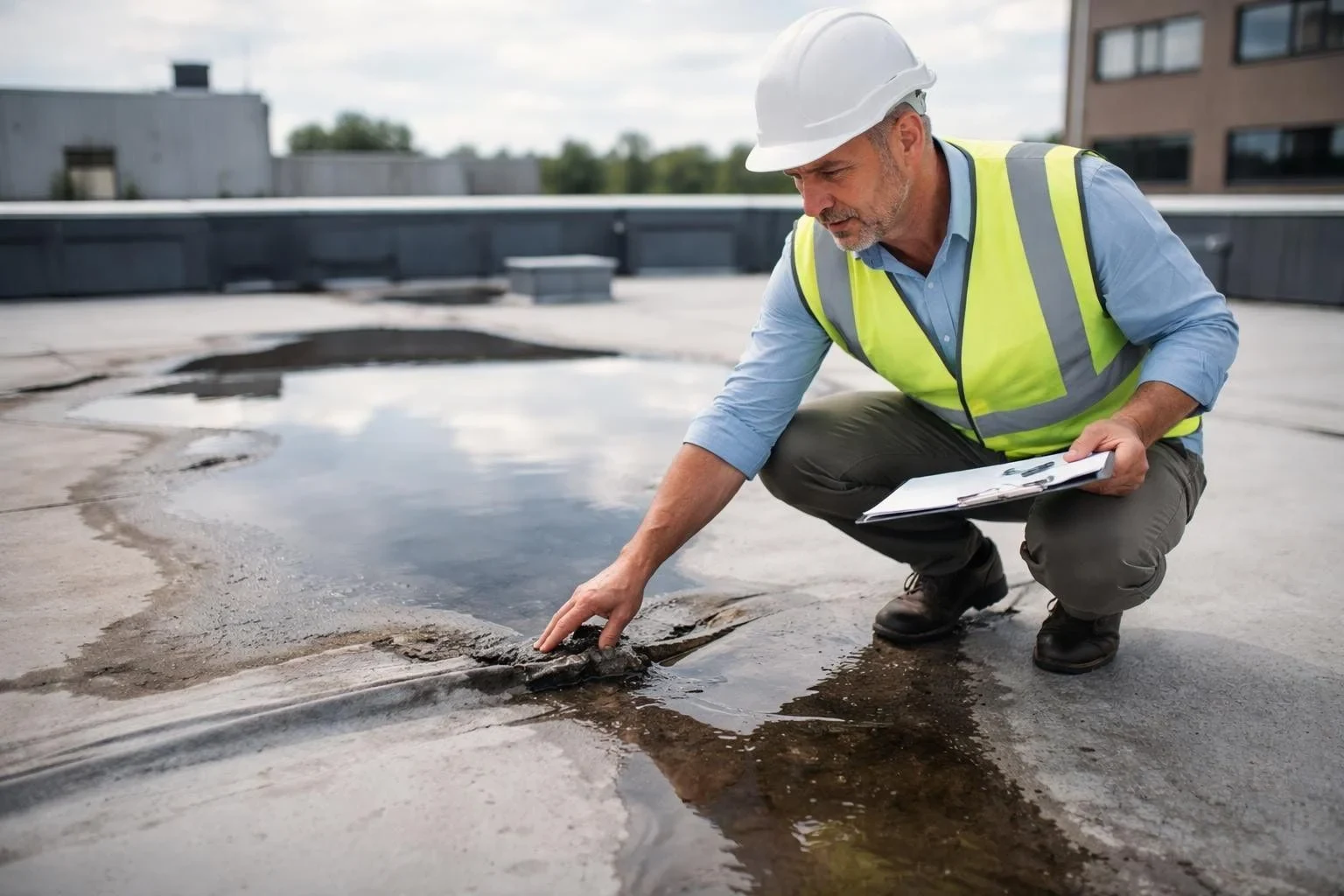
We do not guess. We pull core samples down to the deck at several spots on the roof and we look at what comes out. Dry insulation, a single existing roof, and a sound deck usually mean a recover is on the table. Wet cores or crumbling insulation mean the old roof comes off, because trapping that moisture under a new membrane just moves the failure date, it does not cancel it.
On larger fields we back the cores up with an infrared scan at dusk. Wet insulation holds heat after sundown and shows up as warm patches on camera. That lets us map exactly how much of the roof is wet instead of arguing about it. Sometimes the answer is a hybrid: tear off the saturated thirty percent, recover the dry remainder.
Before we quote either path, here is what we verify on every reroof evaluation:
- Core cuts at multiple locations to count existing roof layers and check insulation condition
- Deck type and condition, including rust on metal decks and rot at wood nailers
- Drainage patterns, ponding areas, and whether tapered insulation should be added
- Edge metal, coping, and parapet condition, since wind failures start at the perimeter
- Rooftop equipment, curbs, and penetrations that need new flashings or raised curbs
- Title 24 cool-roof requirements that apply to the new surface
Working on Occupied Buildings Without Shutting Them Down
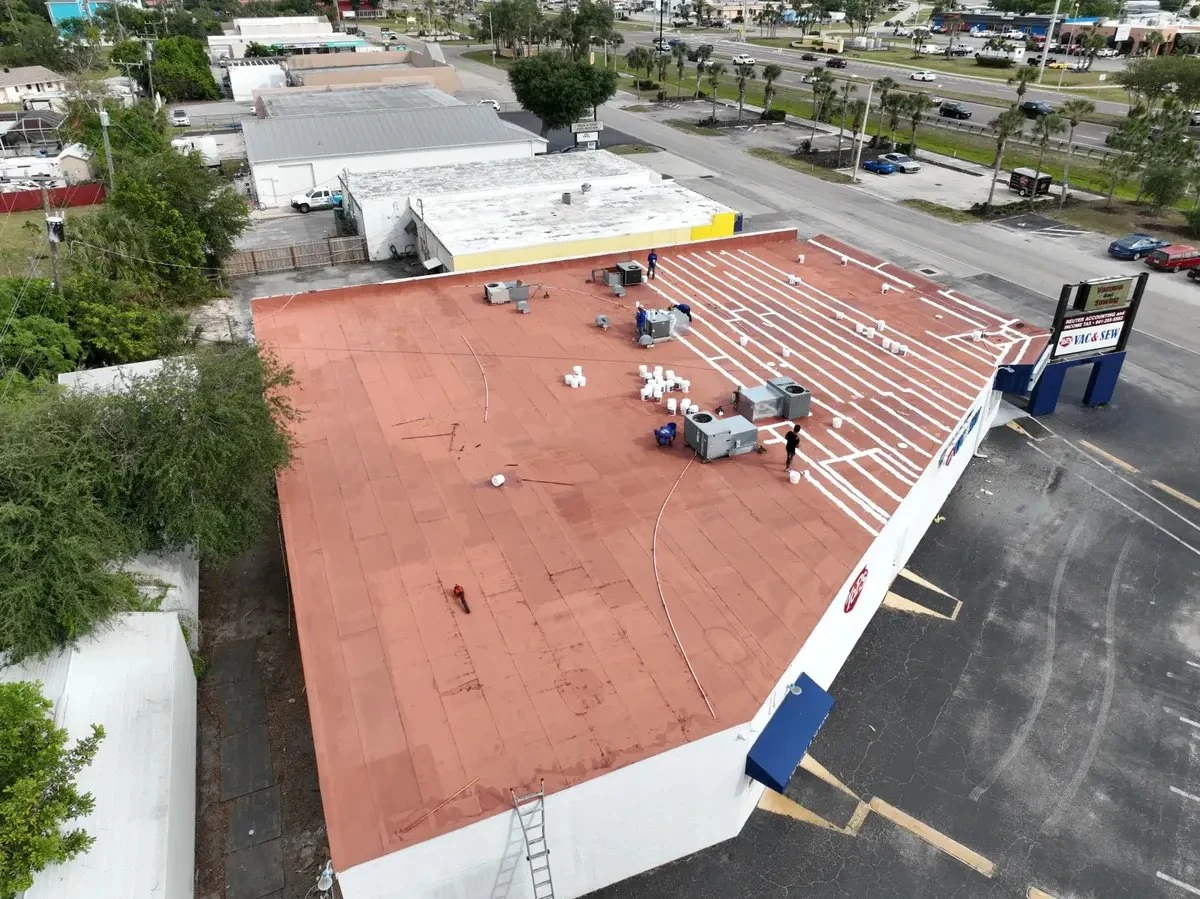
Most of what we reroof is running while we work. Fulfillment buildings in Fontana and Rialto do not stop receiving because there is a roofing crew overhead. So we phase the work in sections, keep material staged away from dock doors, and coordinate crane picks for early mornings before trailer traffic stacks up in the yard.
Odors and noise matter too. Over food distribution space in Colton or medical suites near Loma Linda, we lean toward cold-applied or mechanically fastened systems and schedule the loudest fastening work around the tenant's hours. The superintendent walks the interior with the facility manager before we start so everyone knows which bays are under work each week.
Weather windows get planned, not hoped for. We do not open more roof than we can dry-in the same day, because a surprise monsoon cell coming off the mountains in August will find any section left open. That rule is absolute on our jobs.
Choosing a System That Holds Up Here
For the big flat fields that dominate this market, white single-ply earns its place. A reflective TPO or PVC surface drops the roof temperature substantially in summer, which helps the membrane last and takes load off the rooftop units. California's Title 24 energy code pushes low-slope commercial roofs toward reflective surfaces anyway, so the code and the climate point the same direction. Owners comparing membranes can start with our TPO single-ply roofing page.
Attachment method matters as much as membrane choice. Perimeter and corner zones get enhanced fastening because that is where Santa Ana uplift concentrates. On recovers, we verify the existing roof can anchor the new fastener pattern or we adjust the design. A recover that relies on a deteriorated old roof for attachment is a recover that leaves in the next windstorm.
Coatings deserve a mention as a third path. When a membrane is aged but sound and the seams still hold, a silicone restoration can buy real years at lower cost than either recover or replacement. We tell owners when that is the smarter spend, even though it is the smaller ticket.
Reroofing Questions We Hear From Owners
How do I know if my building qualifies for a recover instead of a tear-off?
Two things decide it: layer count and moisture. Code permits a recover over one existing roof, and the insulation under it has to be dry. We pull cores and run an infrared scan to answer both. If either test fails, a recover is off the table and we will show you the wet cores that made the decision.
Can you reroof while my tenants stay in the building?
Yes, and that is the normal case. We phase the roof into sections, dry-in every section the same day it is opened, and coordinate staging and crane lifts with your operation. Interior protection goes up wherever we are working over sensitive space.
How long does a warehouse reroof take?
It depends on square footage, system, and how much tear-off is involved. A recover moves considerably faster than a full replacement because there is no demolition or disposal. After the evaluation we give you a schedule broken into phases so you can see which weeks touch which parts of the building.
Does a new roof have to meet cool-roof requirements?
On most low-slope commercial buildings in this climate zone, yes. Title 24 sets reflectance and emittance minimums for new roof surfaces. White TPO, PVC, and most coatings meet them without special ordering. We handle the paperwork as part of the permit.
What happens if you find wet insulation partway through the job?
We price the job with a stated unit cost for wet-material replacement before we start, so a surprise never turns into an open-ended change order. Wet areas get cut out, documented with photos, and replaced at that pre-agreed rate.