Silicone Coatings for Roofs That Are Aged, Not Dead
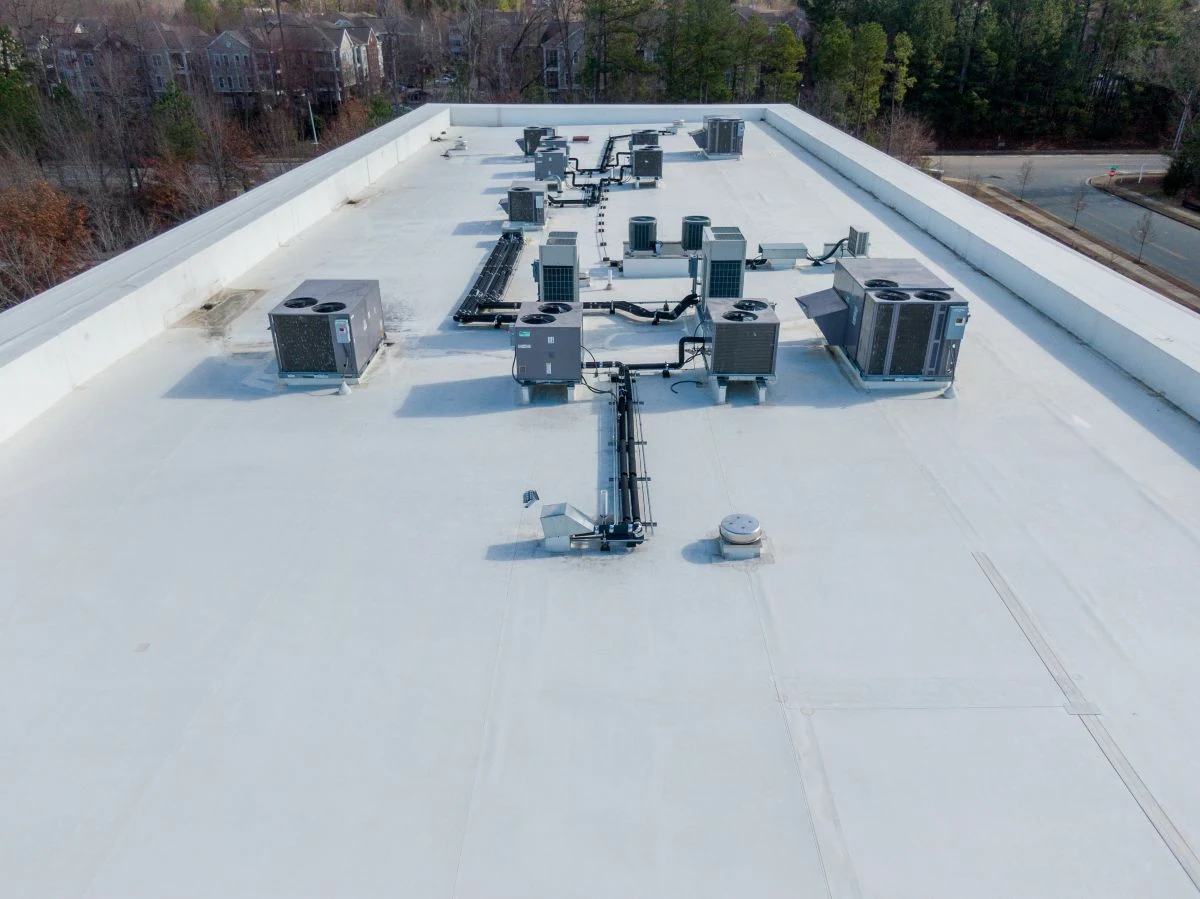
A lot of the roofs we get called out to inspect in this county aren't failing, they're just old and tired, and the owner's first assumption is a full tear-off. Silicone coating restoration is often the better answer, especially on the ponding-prone flat fields common across Fontana and Rialto's warehouse stock. This page covers what silicone actually does, what it doesn't fix, and how we decide whether a roof qualifies.
Why Silicone Specifically, Not Acrylic
Roof coatings come in a few chemistries, and silicone's defining advantage over acrylic is ponding water resistance. Acrylic coatings are water-based and will soften or degrade under standing water that sits for more than about 48 hours. Silicone doesn't have that weakness; it stays stable under permanent ponding, which matters on a lot of the dead-flat warehouse roofs in this valley where drainage was never generous to begin with and re-sloping the whole field isn't in the budget.
Silicone also holds up better under sustained, intense UV than acrylic does, which matters in a climate that gets clear skies and high summer sun for most of the year. The trade-off is that silicone picks up dirt more than some other coatings and can get slippery when wet, so walkway pads at service paths matter more with silicone than with some alternatives.
What Coating Actually Restores
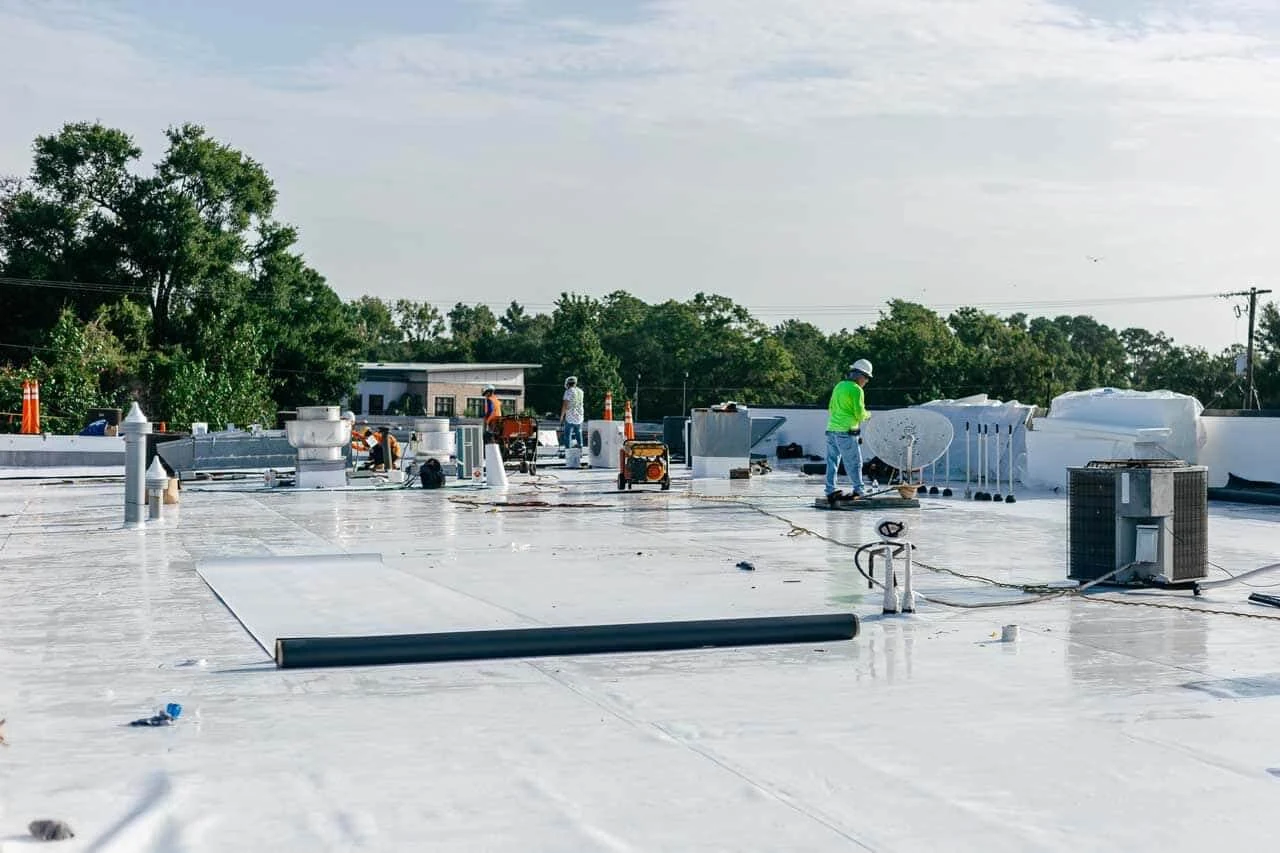
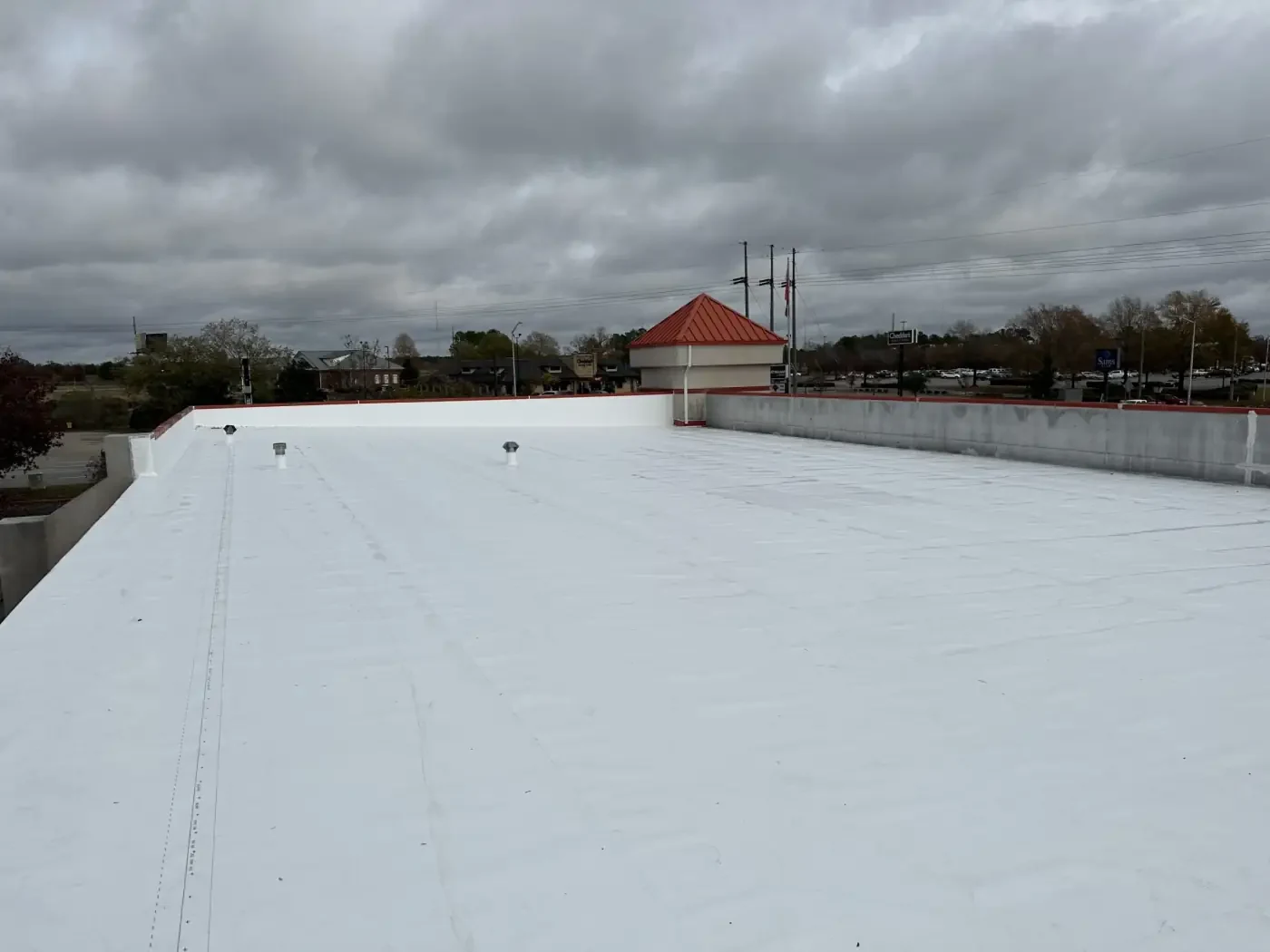
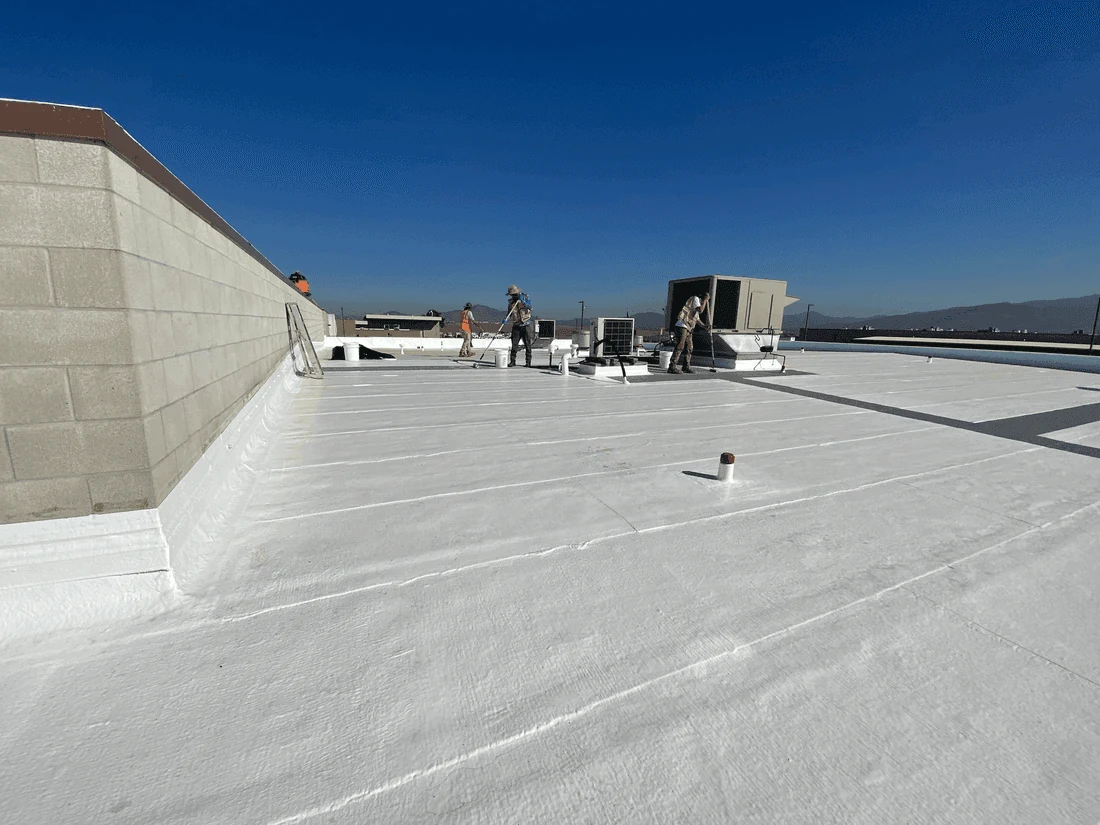
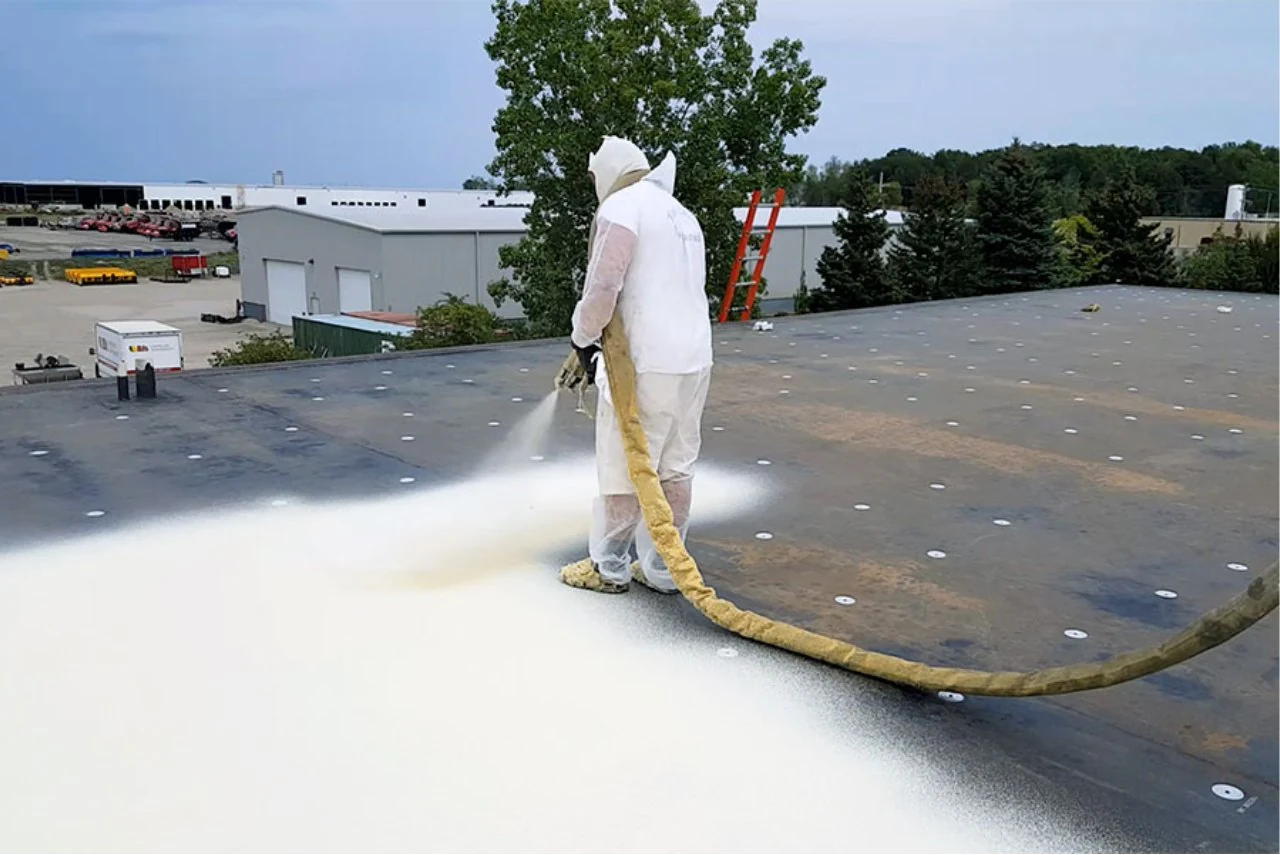
Coating restoration adds a fluid-applied, fully adhered elastomeric membrane over an existing roof, typically 20 to 30 dry mils depending on the substrate and warranty target. It renews UV protection and reflectivity, seals minor seam and flashing deficiencies, and buys the existing membrane additional years of service without demolition, disposal, and new insulation. For an aging TPO, EPDM, mod-bit, or built-up roof that's still structurally sound and free of trapped moisture, that's real value at a fraction of tear-off cost.
What coating does not do is fix a wet roof. Existing insulation that's already saturated stays saturated under a coating; it just gets covered up. That's why every coating candidate gets a moisture survey first, either infrared scan or core cuts, before we quote anything. A roof with widespread wet insulation needs a tear-off, full stop, no matter how good the coating chemistry is.
Candidates We See Across the County
Aging warehouse roofs in Fontana and Rialto that have gone 15-plus years without a major issue but are showing chalking, minor granule loss, or seam wear are the classic case. Grocery stores and strip retail in Yucaipa and Highland with older built-up or mod-bit roofs are another common group, particularly where the owner wants to extend service life without closing the store for a tear-off. High-desert retail in Hesperia and Victorville, where UV exposure runs even harder than in the valley floor, sees accelerated membrane aging that coating restoration addresses directly.
We generally don't recommend coating on a roof already past 25 years old with widespread membrane fatigue beyond surface wear, or on any roof where the moisture survey turns up saturated insulation across more than a small percentage of the field. In both cases coating is spending money to delay an inevitable tear-off rather than genuinely extending roof life.
Prep Work Determines Whether the Coating Holds
Coating failures almost always trace back to inadequate surface prep, not the coating chemistry itself. Our process on every restoration project:
- Full moisture survey before quoting, either infrared or core-cut sampling across the field
- Pressure washing to remove chalking, oxidation, and surface contaminants down to sound membrane
- All seams and flashing details repaired and reinforced with fabric before coating goes on
- Ponding areas identified and, where feasible, corrected with tapered insulation crickets rather than just coated over
- Primer applied where the existing membrane chemistry requires it for adhesion
- Coating applied at full manufacturer-specified mil thickness, verified by wet-mil gauge during application, not estimated after the fact
Warranty and Recoat Cycle
Silicone coating systems typically carry manufacturer warranties in the 10 to 20 year range depending on mil thickness and substrate condition, distinct from and generally shorter than a full new-roof warranty. The honest expectation is a recoat cycle: a silicone-coated roof should get inspected annually and typically needs a maintenance recoat at some point within the warranty term to stay in top condition, which is a fraction of the original coating cost.
We track coating condition the same way we track membrane condition on any roof under a maintenance program, because catching a thin spot or a failing seam early is what keeps a coated roof performing for its full expected life instead of surprising the owner with a leak.
Coating Questions We Get Most
Can you coat over a roof with standing water?
Silicone is the right choice specifically because it tolerates ponding that would break down acrylic coatings. It won't eliminate the ponding itself unless we also add tapered insulation at the low spots.
How do I know if my roof is a coating candidate or needs a tear-off?
A moisture survey tells us. Dry insulation and a structurally sound membrane means coating is on the table. Widespread wet insulation means coating just delays a tear-off that's already necessary.
Does coating work on an old built-up roof as well as single-ply?
Yes, with appropriate prep and primer for the asphalt substrate. Some of our best coating candidates in this county are older mod-bit and built-up roofs on institutional buildings.
How long before I need to recoat?
Depends on mil thickness, UV exposure, and traffic, but plan on an inspection-driven maintenance recoat well before the full warranty term runs out, not a one-and-done application.
Is silicone coating cheaper than a new roof?
Substantially, when the roof qualifies. You're skipping tear-off labor, disposal, and new insulation. That's also exactly why the moisture survey has to be right before we commit to that path.