SBS Modified Bitumen for Older Commercial Roofs and Complex Detailing
A lot of downtown San Bernardino's civic and courthouse buildings, along with older institutional properties around Patton and Loma Linda, are still running modified bitumen roofs, and a fair number of new mod-bit roofs still go down every year. This membrane fits a different niche than the single-plies covering the valley's warehouses. Here's the actual chemistry, where it earns its place, and how application method changes depending on where in the county the building sits.
SBS Rubber-Modified Asphalt, Not Straight Tar
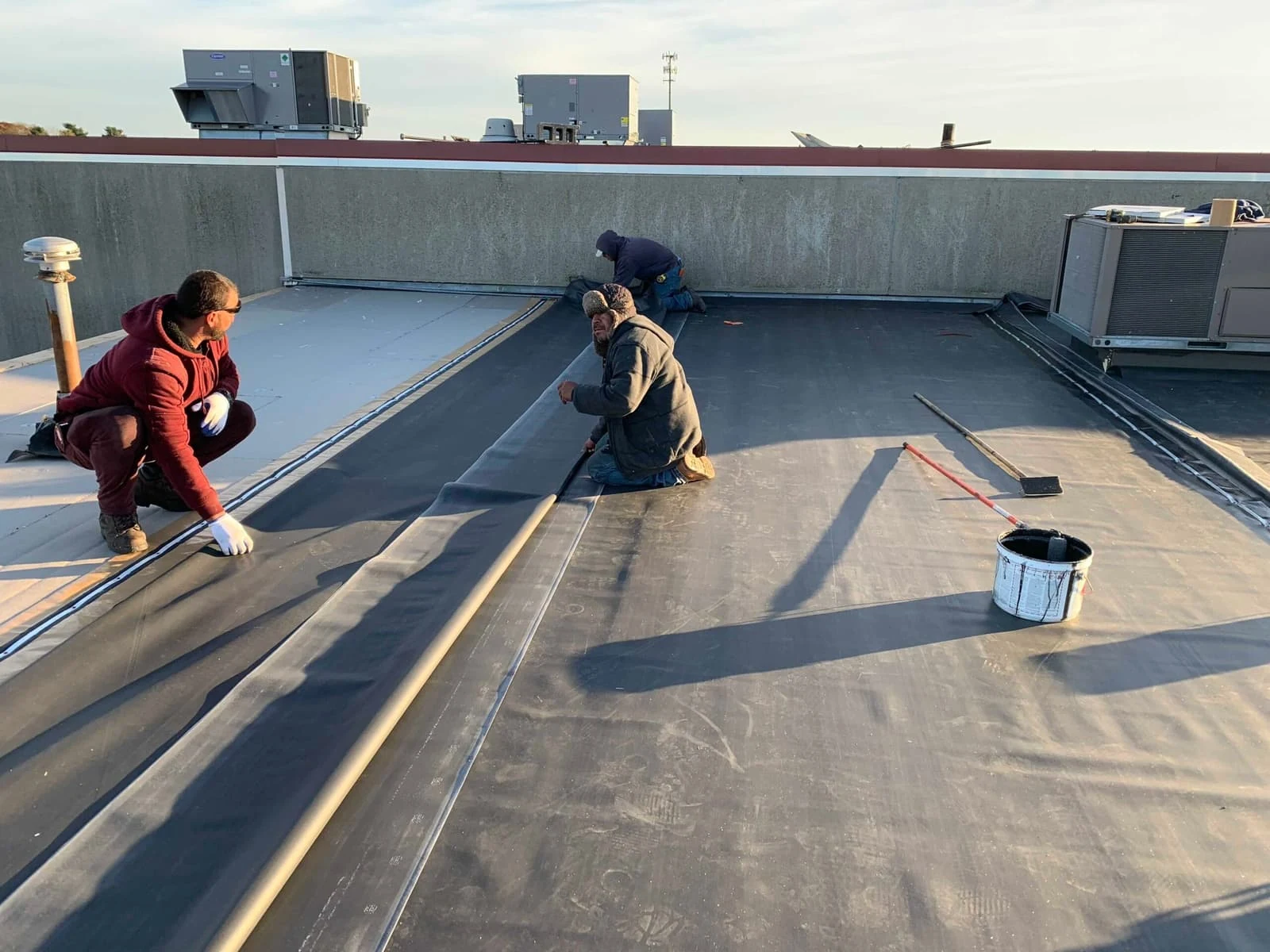
SBS modified bitumen is asphalt blended with styrene-butadiene-styrene rubber, which gives the sheet real elasticity compared to the straight asphalt used in old-style built-up roofing. It's manufactured as rolled sheets, typically a base sheet or two plus a granule-surfaced cap sheet, layered into a true multi-ply system rather than a single membrane doing all the work alone.
That multi-ply nature is the point. Each ply is a redundant layer of protection, so a puncture or a failed seam in the top sheet doesn't automatically mean a leak reaches the deck. On buildings with complex rooflines, old parapet details, and decades of patched penetrations, layered redundancy solves problems that a single sheet doesn't.
Application Method Depends on Where You Are in the County
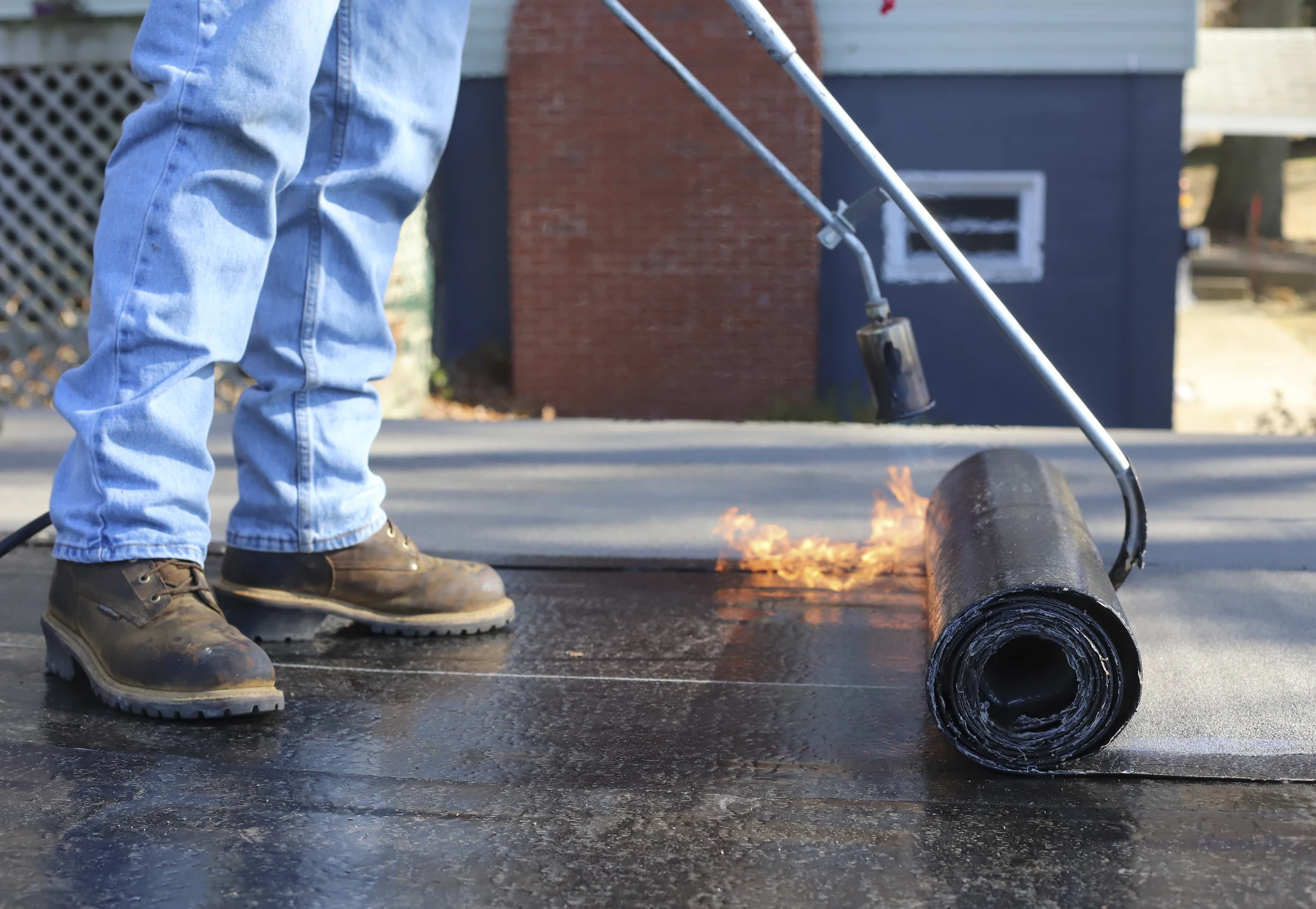
Mod-bit goes down three main ways: torch-applied, using an open flame to melt the asphalt and fuse the plies; hot-mopped, using a kettle of molten asphalt as the adhesive; or cold-applied, using adhesives instead of heat entirely. In the valley, torch and hot-mop are both common and workable, and crews here run them daily on downtown civic buildings, Loma Linda medical facility additions, and institutional roofs near Patton.
Once you're up in the mountain communities, the calculation changes. Crestline, Lake Arrowhead, Running Springs, and the surrounding forested rim towns sit in genuine wildland-urban interface, and open-flame torch work near dry timber is a real fire risk that local fire authorities take seriously. On roofs up there we default to cold-applied adhesive systems, which skip the open flame entirely and still deliver a fully bonded mod-bit assembly. It costs a bit more in labor and material handling, and it's the right call for that terrain regardless of what a permit technically allows on a given day.
Where Mod-Bit Still Beats Single-Ply
Downtown San Bernardino's older civic and courthouse buildings often have roof geometry that single-ply membranes handle awkwardly: short parapet returns, aged mechanical curbs added piecemeal over fifty years, and transitions where a previous built-up roof was patched into an addition. Modified bitumen's multiple plies and hand-worked detailing at these penetrations tend to outperform a single welded sheet forced around the same complexity.
Institutional buildings near Patton State Hospital and additions at Loma Linda University Medical Center fall into the same category. These are campuses with decades of mechanical retrofits stacked onto original roofs, and mod-bit's compatibility with existing built-up systems, plus its tolerance for imperfect substrates, makes it a practical match for phased renovation work rather than a full campus-wide tear-off.
Granule Surfacing and Weather Resistance
The cap sheet's mineral granule surface does two jobs: it protects the asphalt underneath from direct UV exposure, and it gives the roof real resistance to hail and mechanical abrasion. That matters in the foothill zones above Highland and Yucaipa where hail is an occasional but real event, and it matters in the mountain communities where granule surfacing sheds the abrasive effect of ice and freeze-thaw cycling better than a smooth membrane surface would.
Here's what we check on a mod-bit application regardless of method:
- Full ply adhesion checked by cutting test samples at intervals rather than relying on visual inspection alone
- Lap seams sealed and free of fishmouths or voids before the next ply goes down
- Flashing details at parapets and curbs built up in multiple courses, not a single wrap
- Granule embedment on the cap sheet checked for bald spots at seams and details
- Drainage confirmed positive before final ply, since mod-bit doesn't forgive standing water any better than other systems
- Fire-code compliance confirmed for the application method before work starts, especially above the valley floor
Lifecycle and What Ends It
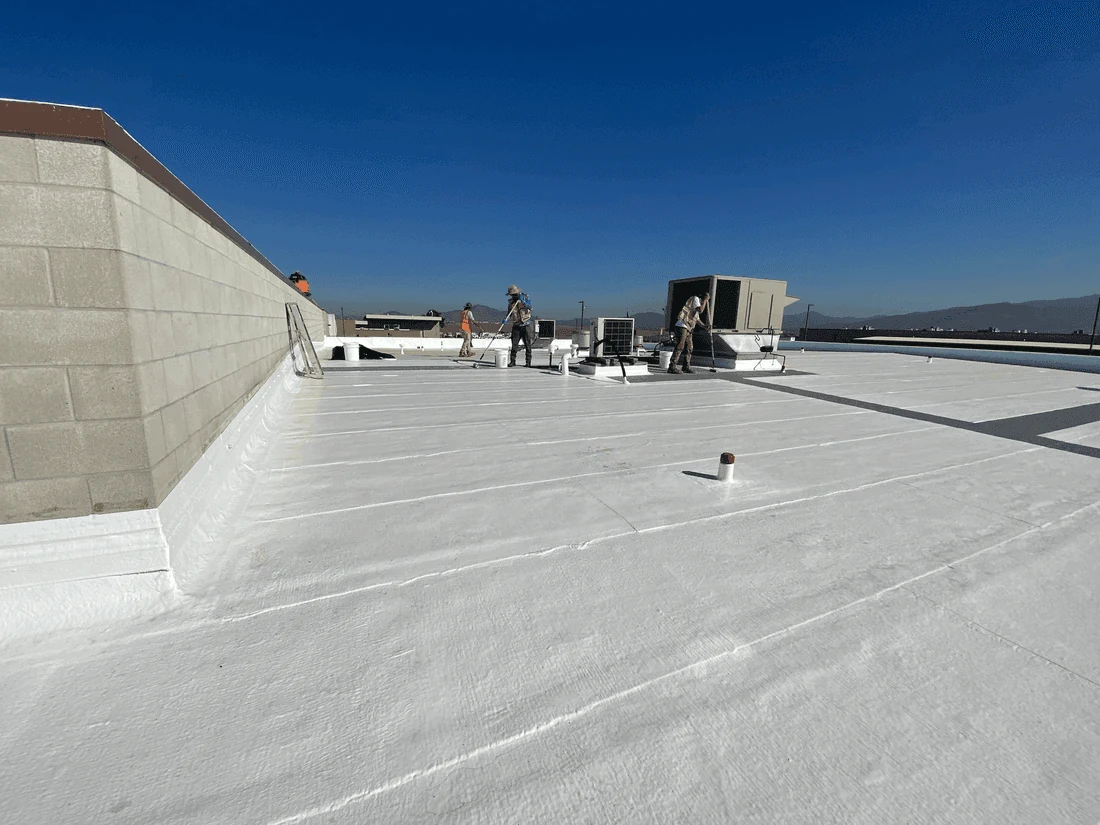
A well-installed SBS mod-bit roof runs 20 years or more in this climate, with granule loss and seam fatigue at flashings as the usual end-of-life signs rather than field failure. UV takes granules off the surface gradually, and once bare asphalt is exposed at any real area, aging accelerates fast. Regular inspection catches thinning granule coverage while a reflective coating restoration is still a viable option instead of a full tear-off.
Blistering is the other common issue, usually from trapped moisture or air during the original installation rather than a defect in the material itself. It's a good reason to have any mod-bit roof, especially an older one on a civic or institutional building, inspected by someone who knows what a benign surface blister looks like versus one sitting over a wet substrate.
Questions on Modified Bitumen Roofing
Is torch-applied mod-bit safe on downtown San Bernardino buildings?
Yes, with standard fire-watch protocols during and after application, same as any torch-down job in an urban commercial area. It's the mountain wildland zones where we switch methods entirely.
Why would you use cold-applied instead of torch or hot-mop?
Fire risk in wildland-adjacent terrain is the main driver locally. Cold-applied also suits re-cover work where heating an old, possibly contaminated substrate isn't a good idea.
How does mod-bit compare to TPO for cost?
Material and labor for a multi-ply mod-bit system generally runs higher than single-ply on a comparable field. The trade-off is better performance on complex, penetration-heavy roofs where TPO's advantages matter less.
Can you patch an old built-up roof with modified bitumen?
Often yes. Mod-bit is asphalt-based, so it's chemically compatible with existing built-up roofing in a way single-ply membranes generally aren't, which is why it's a common choice for institutional campus phasing.
What actually kills a mod-bit roof early here?
Trapped moisture from a bad original install, granule loss left unaddressed until asphalt is exposed to direct UV, and flashing failures at parapets that go unnoticed because nobody's routinely walking the roof.