Keeping Production Lines Dry Under a Working Plant Roof
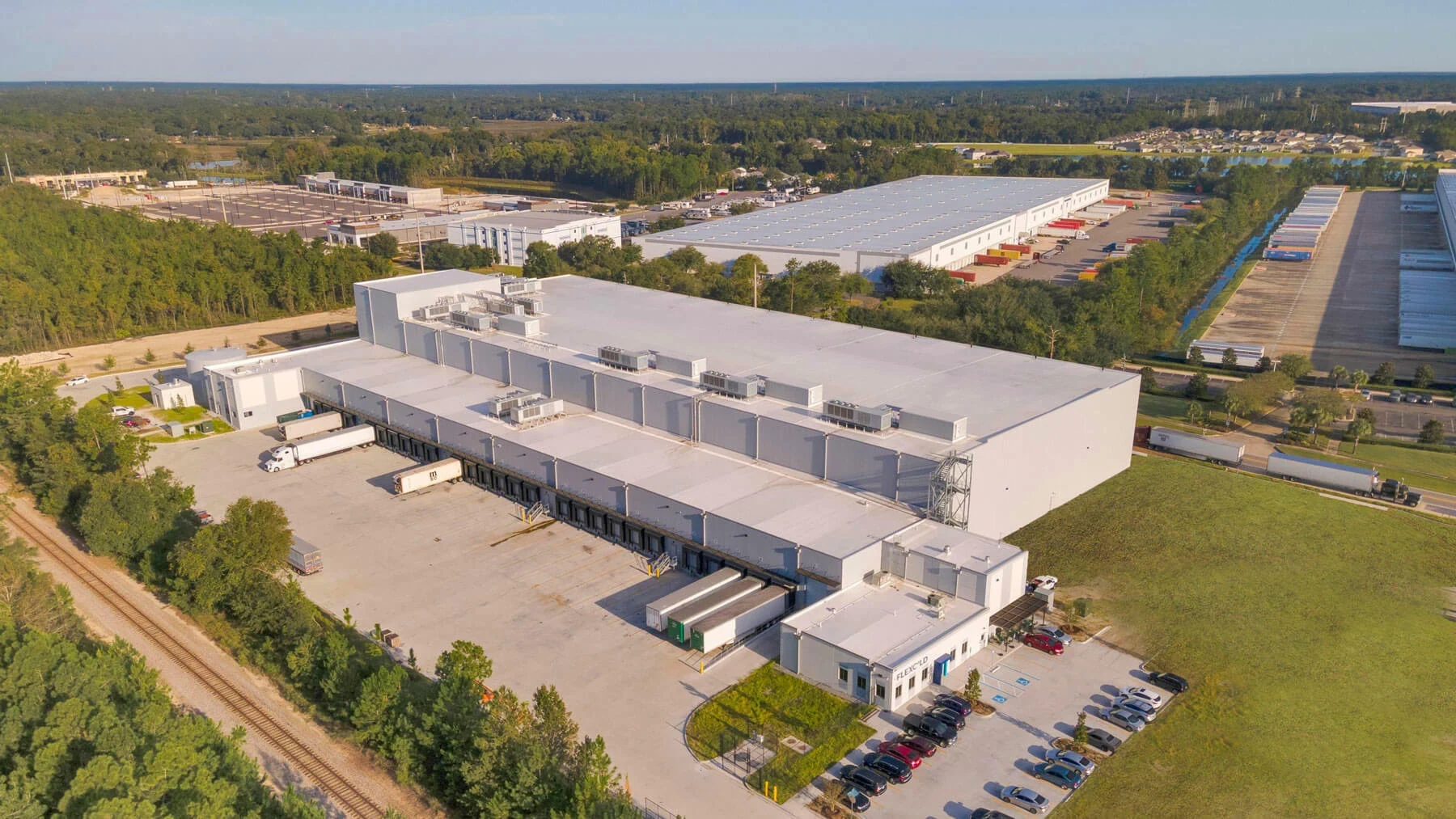
Manufacturing in the eastern Inland Empire runs alongside the same warehouse boom everyone talks about, packed into industrial parks in Fontana, Rialto, and Redlands and along the rail spurs near Colton. These plants build things, metal fabrication, plastics, food ingredients, packaging, and every one of them sits under a roof carrying decades of add-on equipment. We work for the people who keep that roof from becoming the reason the line stops.
Who Actually Calls Us From a Plant
The plant manager cares about one number: hours of downtime. The maintenance supervisor cares about the specific unit that's dripping and whether it's roofing's fault or HVAC's fault. The EHS or safety coordinator cares about hot work permits, fire watch, and whether our crew's activity creates a hazard next to a process area. We deal with all three on most jobs, and we write our reports so each person gets the part that matters to them without digging through the whole file.
None of these people are roofing experts, and none of them should have to become one to get a straight answer. We tell you what's actually failing, what it costs to fix versus replace, and what happens if you wait a season.
A Deck That Has Absorbed Thirty Years of Retrofits
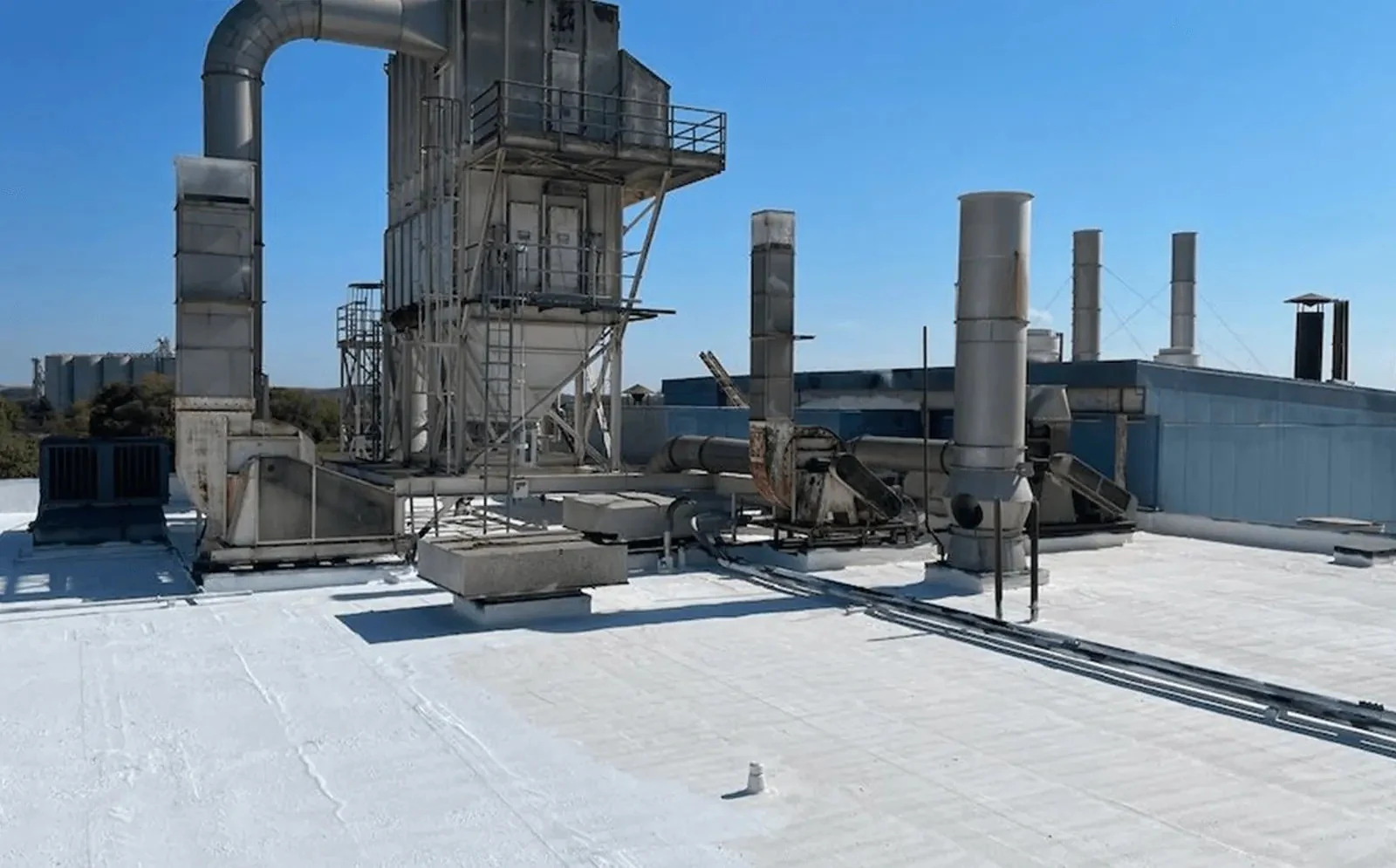
Older plant roofs in this market rarely look like the drawings anymore. Rooftop units get swapped by whoever won that year's HVAC bid. Dust collection ductwork and exhaust stacks get added by a process engineer solving a floor problem, not a roof problem. Conduit racks and catwalks get bolted through the membrane by an electrical contractor on a deadline. Every one of those additions is a penetration, and every penetration is a place water can get in if the flashing wasn't detailed right the first time.
Our first visit to a manufacturing roof is usually a survey, not a repair. We walk the whole deck, catalog every penetration, photograph flashing condition, and flag the ones that were never sealed to a roofing standard in the first place. That list becomes the maintenance plan. Most plant leaks we chase down trace back to somebody else's retrofit, not the original membrane.
Hot Work Rules Change Next to a Process Floor
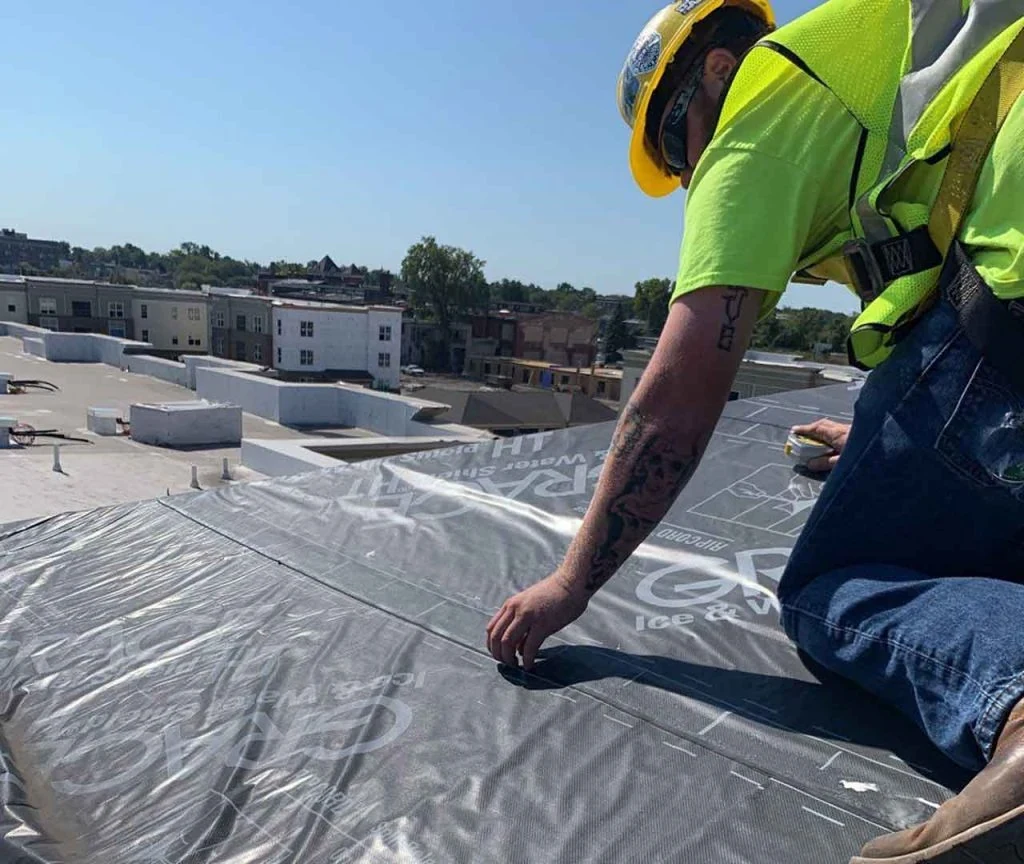
A lot of manufacturing here involves combustible dust, wood, metal fines, plastics, plus solvent storage, powder coat lines, or paint booths with makeup air intakes on or near the roof. Torch-applied modified bitumen and open-flame work are off the table close to any of that, and we don't need to be told twice. We coordinate hot work permits and fire watch through your EHS team before we mobilize, and on plants where flame is restricted entirely we spec cold-applied adhesives, mechanically fastened membranes, or self-adhered systems instead.
Intake placement matters just as much as flame. If your dust collection or makeup air intakes sit downwind of our work zone, adhesive odor and dust from tear-off can pull straight into your process air. We sequence work against wind direction and intake location the same way we would on a food plant, because the failure mode, contaminating a process, is the same risk under a different name.
What a Manufacturing Roof Maintenance Account Includes
Most of our plant clients move off one-off emergency calls and onto a standing account once they've had one line stoppage caused by a roof problem nobody was watching. A typical account covers:
- Full equipment-penetration survey with a flashing condition rating for every RTU, stack, and conduit run
- Hot-work-free repair options pre-approved by your EHS team for combustible-dust environments
- Scheduled inspections timed around planned shutdowns, changeovers, or slow production weeks
- Drainage checks tied to RTU condensate lines and roof drains, since plant equipment adds water paths the original design never planned for
- Photo-documented repair history that survives a change in maintenance staff or ownership
- Emergency dispatch protocol with your site's badging, PPE, and fire-watch requirements on file in advance
The Cost of an Hour of Downtime Decides the Schedule
We don't schedule plant roof work on our calendar, we schedule it on yours. Most manufacturing here runs multiple shifts, so loud tear-off or noisy fastening happens during the window your production schedule allows, often nights or weekends between shifts. Planned shutdowns and changeovers are the best windows we get all year, and we plan major recover or replacement projects around them whenever a plant will share that calendar with us.
Weather sets its own limits. Summer heat here runs past what most adhesives and coatings are rated for during midday, so we shift crews to early mornings on hot months and plan cure-sensitive work for spring and fall. Santa Ana wind events are the other variable, a loose membrane edge on a plant roof behaves the same as on a warehouse roof, and we walk perimeter securement after any significant wind event on the accounts we maintain. See our maintenance programs for how we structure that on an annual basis.
What Plant Maintenance Teams Ask Before They Sign Off
Can you work without shutting down our line?
In almost every case, yes. We stage away from active process areas, coordinate noisy or odor-producing work for shift gaps or planned downtime, and split larger projects into sections so no more roof than necessary is open at once.
Our roof has dozens of penetrations from different contractors over the years. Where do you even start?
With a full survey. We catalog every penetration, rate the flashing condition, and prioritize by leak risk and consequence, a stack over your control panel gets attention before one over an empty storage bay.
Do you work around hot work restrictions in a combustible-dust environment?
Yes. We pull permits through your EHS process, staff fire watch when required, and default to cold-applied or mechanically fastened systems on any site where open flame isn't an option.
Can roof repairs interfere with our dust collection or makeup air?
They can if nobody plans for it. We check intake locations before starting and sequence work to keep adhesive fumes and tear-off dust from drifting into your air handling.
Do you handle emergency calls when a rooftop unit condensate line backs up onto the roof?
Yes, and that's a more common call than people expect. We trace it to the source, usually a clogged line or a drain the RTU installer routed wrong, and fix the roof-side path along with flagging the mechanical issue for your HVAC contractor.