Modified Bitumen for Low-Slope Retail and Mixed-Use Roofs
Modified bitumen still covers a fair share of the retail strips and mixed-use buildings scattered through the valley, especially where an addition or a re-roof happened sometime in the last twenty years. It's a different animal from single-ply membrane, and it gets maintained differently too.
Where Mod-Bit Still Makes Sense
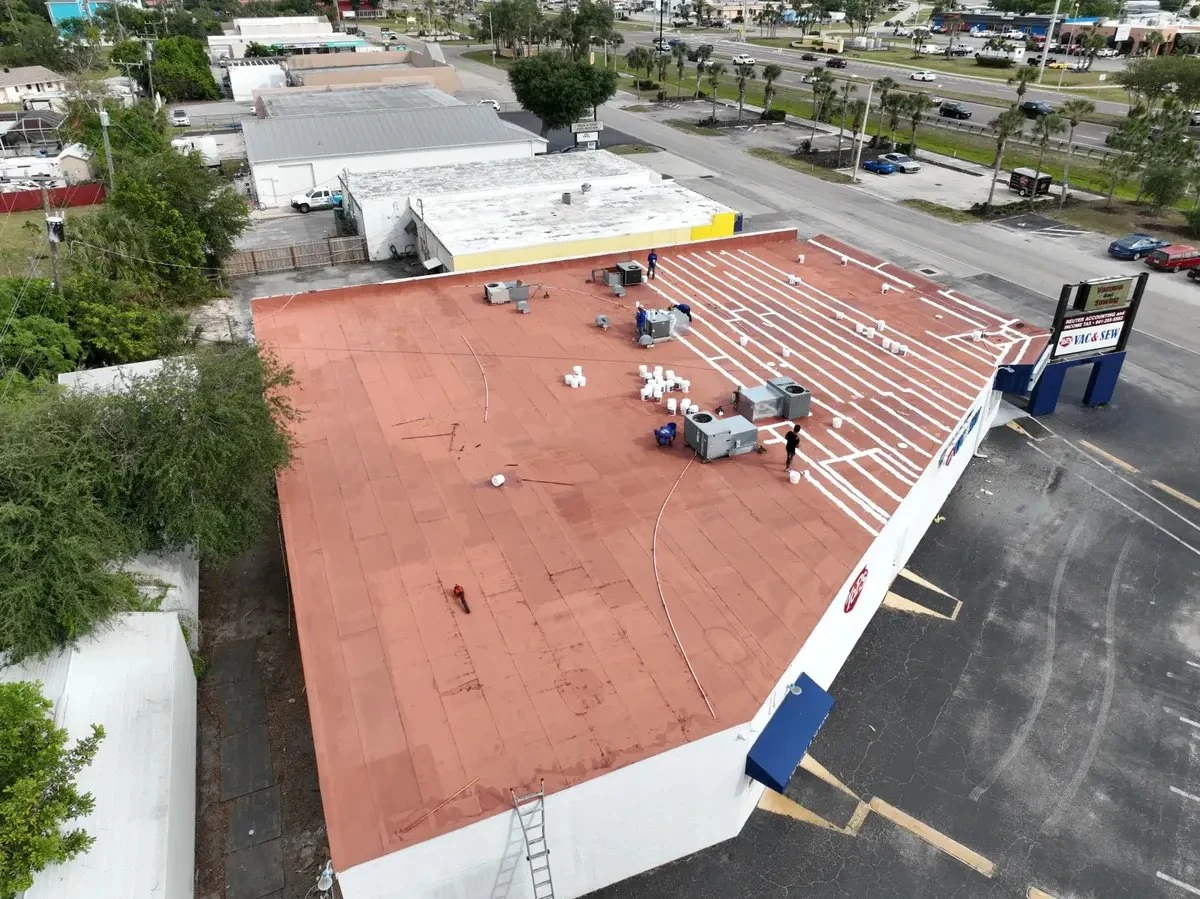
SBS modified bitumen is a good fit on smaller low-slope commercial roofs, strip retail, small office buildings, additions tied into older construction, where the multi-ply, redundant nature of the system suits a building that isn't going to see the traffic and scale of a distribution center roof.
We also see it specified where an owner wants a granulated cap sheet finish for appearance or where a roof ties into an adjacent built-up section and matching material makes the tie-in cleaner.
Torch-Applied, Self-Adhered, or Cold Process
Torch-applying the cap sheet is still common, but we favor self-adhered and cold-applied systems on buildings near dry brush and foothill vegetation, think the edges of Highland and Yucaipa where the terrain backs up against wildland growth. An open flame near that kind of exposure is a risk we'd rather not take when a self-adhered system gets the same result.
On more urban, lower-risk sites, torch application is still a legitimate method, and the choice comes down to the specific site conditions rather than a blanket rule.
Base Sheet, Interply, and Cap Sheet
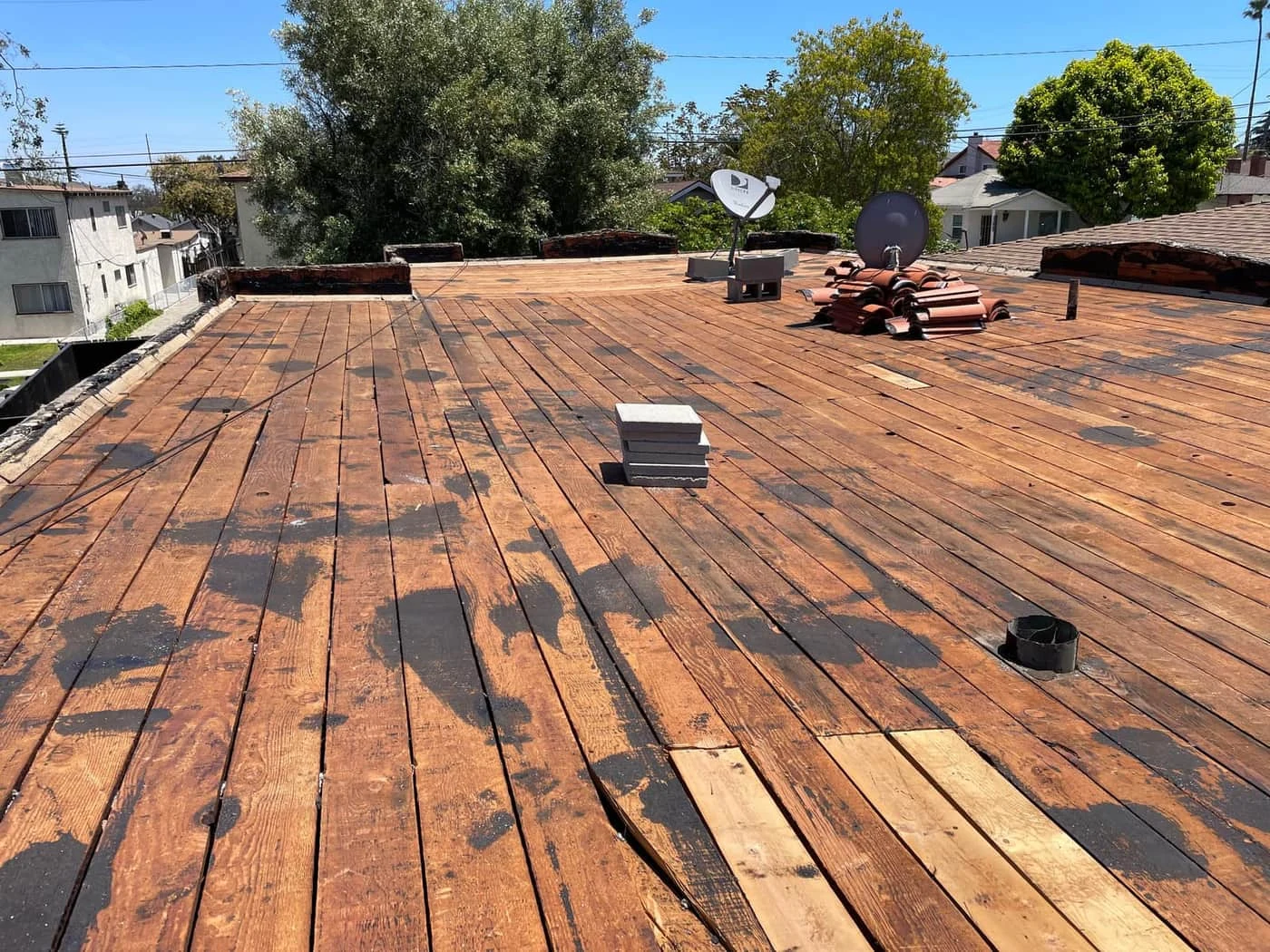
A proper mod-bit system is layered: a base sheet mechanically fastened or adhered to the deck, an optional interply sheet for added thickness and redundancy, and a granulated cap sheet on top that takes the weather and UV exposure directly.
That layering is the whole point of the system, if the cap sheet gets damaged, the layers underneath are still providing protection while we make the repair, which is different from a single-ply membrane where one breach goes straight to the deck.
Granule Loss and UV Wear on Cap Sheets
The granules embedded in the cap sheet protect the asphalt underneath from direct UV exposure. Once granules wear away in a spot, usually from foot traffic or just age, that bare asphalt degrades noticeably faster than the rest of the field.
We check granule coverage as part of every mod-bit inspection, especially around rooftop equipment and walk paths, since that's where granule loss shows up first.
A granule-loss coating pass can buy a mod-bit roof several more years of service when the layers underneath are still sound, which is often a better use of an owner's budget than jumping straight to a full cap sheet replacement.
- Granule loss exposing bare asphalt
- Blistering across the membrane field
- Open laps at seam edges
- Cracked or split flashing at parapet walls
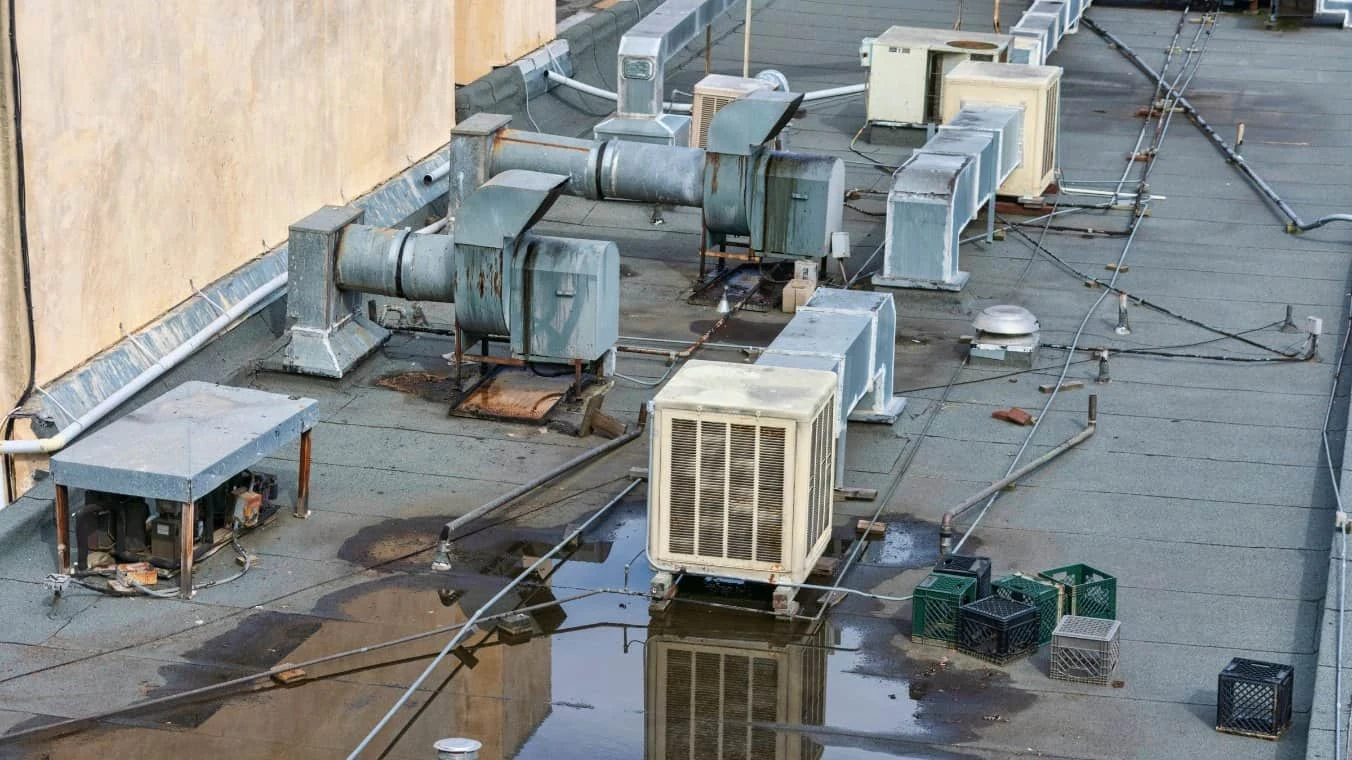
- Ponding water at structural low points
- Exposed fabric reinforcement where the cap sheet has worn through
Tying Mod-Bit Into Adjacent Membrane Roofs
Plenty of buildings around here have grown in stages, an original built-up or mod-bit section with a newer TPO addition tied in at some point. Those transitions are where we spend extra time, since two different roofing chemistries meeting at one line is the most common place for a tie-in leak to start.
We detail those transitions with a proper termination bar and compatible flashing rather than just lapping one material over the other and hoping it holds.
We see this most often on retail strips that added a drive-thru bay, a loading dock canopy, or a second-story office section years after the original building went up. Each addition brought its own roofing crew and its own material choice, and now our job is making the seams between those sections behave like one roof instead of three.
Common Questions on Modified Bitumen
Is modified bitumen roofing outdated compared to single-ply membrane?
Not outdated, just suited to different situations. Mod-bit's redundant, multi-ply design still holds real advantages on smaller roofs and tie-in sections.
Can you recoat a mod-bit cap sheet instead of replacing it?
If the cap sheet is intact with granule loss but no widespread blistering or wet insulation, a reflective coating can extend its service life. We check the underlying layers first.
Why would you use self-adhered instead of torch-applied mod-bit?
Fire risk near dry vegetation is the main reason, along with jobsite conditions where an open flame isn't practical. Self-adhered systems achieve a comparable result without that risk.
How long does a modified bitumen roof typically last here?
A properly installed and maintained system, with granule coverage intact and no ponding issues, holds up for a solid multi-decade service life in this climate.
What's the biggest cause of early mod-bit failure you see?
Ponding water at low points that were never properly sloped to drain during the original install. It accelerates every other failure mode on the list above.