EPDM Roofing on the Inland Empire's Older Industrial Stock
EPDM is not what's going onto new warehouse roofs anymore, but it's still up there on a lot of buildings built in the 1980s and 1990s, before TPO became the standard. If your building falls into that category, this page covers how the membrane behaves and what tends to go wrong with it.
Where We Still Find EPDM in the Valley
Older strip retail centers, some pre-2000 industrial buildings around Colton and Rialto, and a handful of institutional roofs still carry EPDM. It was the workhorse single-ply membrane before TPO's reflectivity and weldable seams took over new construction.
Plenty of these roofs are still functional. EPDM is a durable rubber membrane, and a well-maintained system with no wet insulation underneath can keep performing for years past what an owner expects, provided the seams and flashings are holding.
Black vs White Membrane: Which One We Spec
Standard EPDM is black, which absorbs heat rather than reflecting it. On an occupied building where interior cooling cost matters, we often spec white EPDM instead, or recommend a reflective coating over existing black membrane rather than a full replacement.
Black membrane still has its place, particularly on unconditioned buildings or where the extra UV stability of the black compound outweighs the reflectivity argument.
Ballasted, Mechanically Fastened, or Fully Adhered
Ballasted EPDM, membrane held down with river rock rather than fasteners or adhesive, shows up on some of the older flatter roofs in the area, though it's less common on new work now due to the weight it adds to the structure. Mechanically fastened and fully adhered systems are more typical on the buildings we service today.
Each attachment method fails differently. Ballasted roofs hide membrane condition under the rock; fully adhered systems can show adhesive failure at seams; mechanically fastened roofs are the ones most exposed to wind uplift at the fastening plates.
Before recommending a replacement attachment method, we look at the roof's wind exposure and the structure's load capacity, since ballast weight isn't always an option on an older deck that wasn't engineered for the additional dead load.
Common Failure Points on an EPDM Field
Unlike TPO, EPDM seams are bonded with liquid adhesive and seam tape rather than heat-welded, and that seam tape is the first thing to give out over time. Sun exposure and thermal cycling break down the adhesive bond years before the membrane itself wears through.
Flashing at penetrations and parapet walls is the other recurring problem. EPDM flashing details rely heavily on that same adhesive bond, and a lifted corner there is usually where water gets in first.
- Seam tape lifting or separating
- Granule loss and chalking on black membrane surface
- Membrane shrinkage pulling away from the perimeter
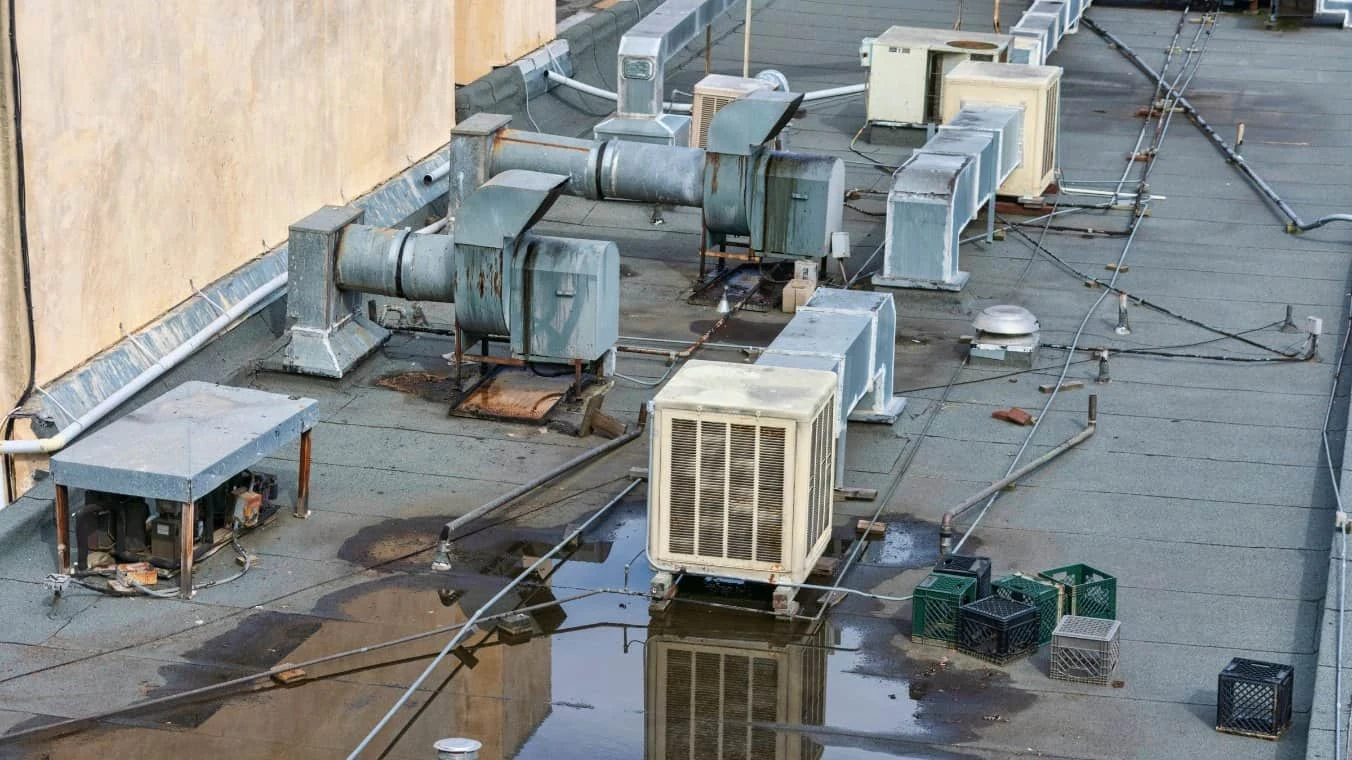
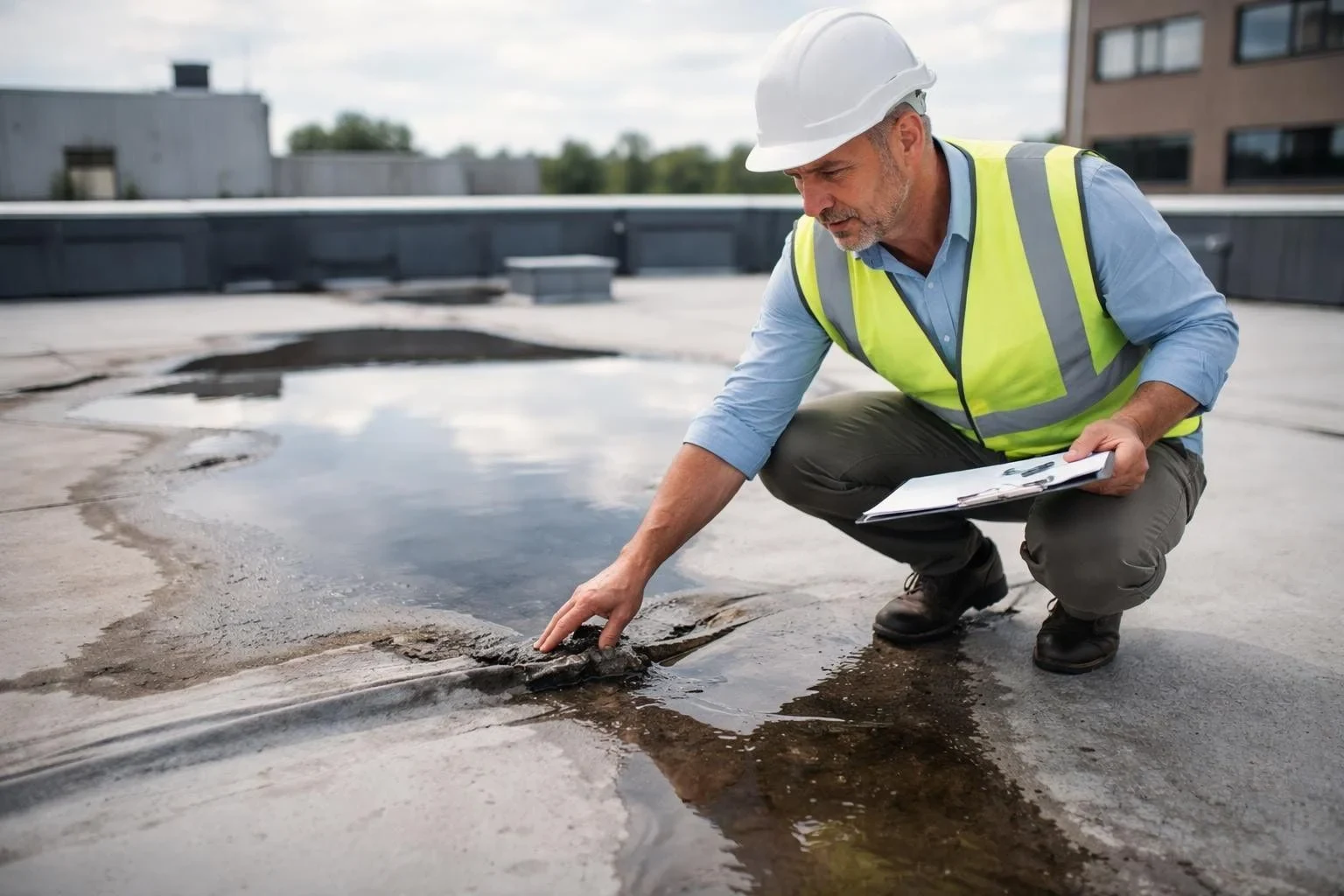
- Ponding water holding for 48 hours or more
- Flashing separating at pipe and curb penetrations
- Patches stacked on top of older patches
Patch and Repair vs Full Replacement
A roof with isolated seam or flashing failures and a dry deck underneath is usually a repair candidate. We re-adhere or re-tape the affected seams, replace failed flashing, and move on.
Once a roof shows widespread shrinkage, multiple stacked patches, or a moisture scan comes back wet in several areas, patching stops making financial sense. At that point we talk through recover or full replacement options rather than chase leaks one at a time.
We're straightforward with property managers about that line. A building owner working a tight capital plan doesn't benefit from us patching the same roof every year when a recover would cost less over a five-year horizon than the repeated service calls. We lay out both numbers before recommending a direction.
What We Get Asked About EPDM
Is EPDM still a good option for a new roof, or should I switch to TPO?
For most new installations we recommend TPO or PVC given the reflectivity and weld-seam advantages, but EPDM still has valid uses, particularly where flexibility in cold conditions or specific chemical resistance matters.
How do you tell if seam tape has failed versus a membrane puncture?
Seam failure shows as a visible gap or lift right along the seam line; a puncture is an isolated hole in the membrane field itself. Both get diagnosed during the same inspection but repaired differently.
Can you switch an old ballasted EPDM roof to a lighter, more efficient system?
Yes, though removing ballast rock is its own project. We evaluate the deck and structure first, since that determines whether a lighter mechanically fastened or fully adhered system is a straightforward swap.
Does coating an EPDM roof extend its life?
A quality coating can extend a sound EPDM roof's service life and improve reflectivity, but it won't fix membrane shrinkage or failed seams underneath, those need to be repaired first.
How often should an EPDM roof be inspected?
We recommend twice-yearly walks at minimum, with an additional check after any significant wind event, since seam and flashing issues on EPDM tend to progress quietly until they show up as an active leak.